Somatic Healing 101: How to Move Your Body to Release Stored Trauma
I used to think burnout meant I needed a vacation.
So I booked the trip. Packed the linen pants. Ordered the green juice. I came back with a tan… and the same tight jaw, shallow breathing, and that low hum of anxiety I couldn’t quite name.
Here’s the thing: my body didn’t care that I’d changed locations. It was still carrying the same tension. The same unfinished stress cycles. The same cognitive load from emails, news alerts, and the subtle pressure to be “on” at all times.
Modern burnout doesn’t always look dramatic. Sometimes it’s just a nervous system that never powers down.
It turns out, we can’t think our way out of stress. We have to move our way through it.
This is where somatic healing enters the chat.
Not as a buzzword. Not as a rigid protocol. But as a way of coming back into our bodies gently, consistently, sustainably.
Let’s talk about how it actually works in real life.
What Is Somatic Healing Really?
At its core, somatic healing is about paying attention to physical sensations and using mindful movement to help the body process stress.
We store stress physically. In shoulders that creep toward our ears. In hips that feel welded shut. In a chest that forgets how to expand fully.
Somatic practices invite us to notice those places. And move them.
Not aggressively. Not performatively. Just intentionally.
I used to think healing had to be dramatic deep cathartic crying, intense workouts, big emotional releases. But now I know the body often prefers subtler cues: rocking, stretching, swaying, walking in sunlight, slow breathing.
Small movements. Repeated often.
The Biological Why: Your Nervous System Is Listening
We don’t need a neuroscience degree to understand this. But a little biology helps.
Your Nervous System Has Two Main Modes
- Fight-or-flight (sympathetic activation)
- Rest-and-digest (parasympathetic activation)
Modern life keeps us stuck in the first one. Slack notifications. Traffic. Deadlines. Even doom-scrolling.
Your body can’t tell the difference between a saber-toothed tiger and an inbox marked “urgent.”
When stress hormones rise, muscles tense. Heart rate increases. Breathing shortens.
If we don’t physically discharge that energy, it lingers.
That lingering tension? That’s what people often describe as “stored trauma” or “being stuck in my body.”
Sunlight, Circadian Rhythm, and Mood
Let’s make this practical.
Morning sunlight helps regulate your circadian rhythm your internal body clock. Exposure to natural light early in the day supports healthier sleep-wake cycles, steadier mood, and more balanced cortisol patterns.
When I started stepping outside within 30 minutes of waking no phone, just light I noticed something subtle but profound. My afternoons felt less frantic. My evenings less wired.
The body thrives on rhythm.
And rhythm is a somatic intervention.
Movement Reduces Cognitive Load
When you move especially rhythmically, like walking or gentle cycling you lower mental clutter. Studies show physical activity can improve executive function and reduce rumination.
It’s not about burning calories. It’s about creating space in the mind.
The body moves. The brain softens.
Pro-Tip: The 90-Second Reset
When stress spikes, stand up. Shake out your hands. Roll your shoulders. Take five slow breaths with longer exhales. It sounds simple. It works because you’re signaling safety through the body not arguing with your thoughts.
The Routine Breakdown: A Realistic Daily Guide
Let’s build a somatic-friendly day. Not a perfect one. A real one.
Morning: Regulate Before You React
1. Step outside within 30 minutes of waking.
Even five minutes of natural light supports circadian rhythm balance.
2. Gentle mobility before coffee.
Think neck rolls. Cat-cow stretches. Slow hip circles. You’re not trying to “work out.” You’re waking up tissue that’s been still for hours.
3. Breath before screen.
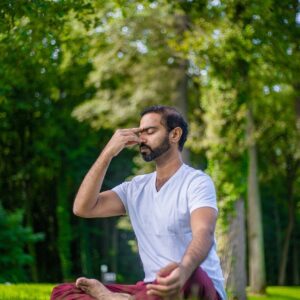
Try 4-count inhale, 6-count exhale for two minutes. Longer exhales stimulate the parasympathetic response.
I used to reach for my phone first thing. Now I reach for the window.
Tiny shift. Big difference.
Midday: Discharge Stress in Real Time
Stress accumulates throughout the day. The key is micro-releases.
Somatic snack ideas:
- A 10-minute walk after lunch
- Standing and swaying while on a call
- Stretching calves against a wall
- Shaking out your arms in the bathroom (yes, really)
We are not meant to sit for eight hours.
Your hips know this.
Evening: Downshift Intentionally
Evenings are where many of us sabotage recovery.
Bright lights. Intense workouts. Heavy news consumption.
Instead:
- Dim overhead lights after sunset
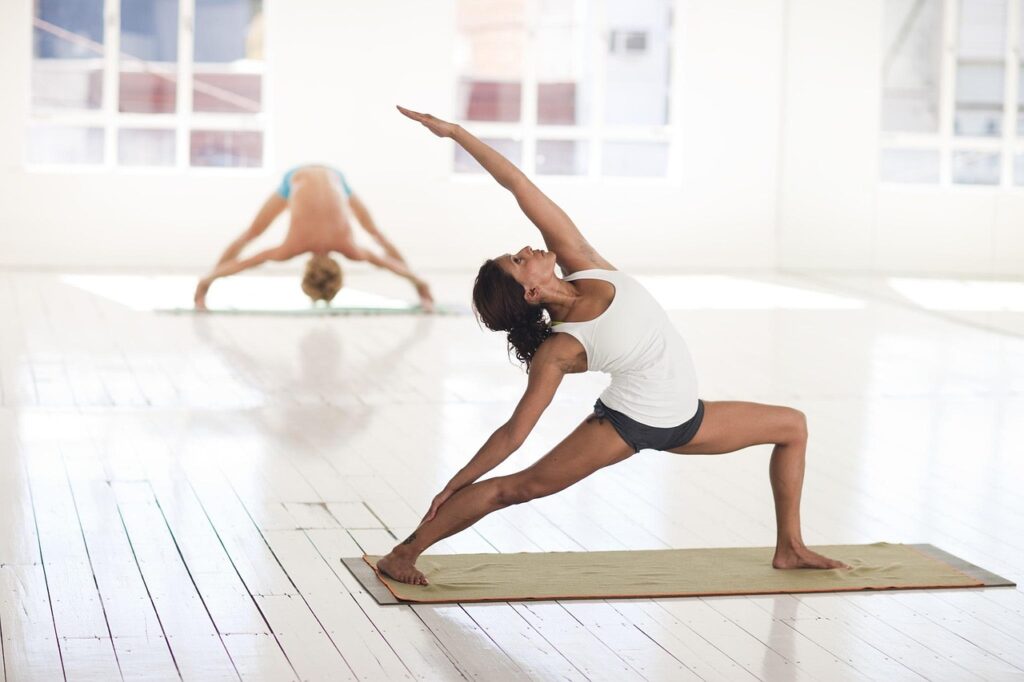
- Try restorative yoga or slow stretching
- Put your legs up the wall for five minutes
- Journal one physical sensation you noticed that day
The goal is signaling safety.
Safety is what allows the body to let go.
Pro-Tip: Sustainable Fitness Beats Intense Bursts
Trauma-informed movement is not about punishing workouts. Choose forms of exercise you can imagine doing five years from now. Walking. Swimming. Pilates. Dancing in your kitchen. Consistency beats intensity every time.
The Nutrition Movement Connection
We can’t talk about somatic healing without talking about fuel.
Not dieting. Not restriction.
Fuel.
Nutrient-Density Supports Nervous System Stability
Your brain and nervous system rely on steady energy. When blood sugar spikes and crashes, so does mood.
A few supportive shifts:
- Pair protein with carbohydrates (like eggs and toast, yogurt and fruit)
- Add colorful vegetables for micronutrients
- Include healthy fats for satiety
I used to skip lunch when I was busy. Then I’d wonder why I felt shaky and irritable by 4 p.m.
It wasn’t a personality flaw. It was biology.
Movement Changes How We Relate to Food
When exercise becomes punishment, food becomes negotiation.
When movement becomes regulation, food becomes support.
Notice the difference.
After a slow walk in the sun, I crave water. Something fresh. Something grounding.
Somatic healing shifts us from control to collaboration with our bodies.
Busting Myths About Somatic Healing
Let’s clear a few things up.
Myth #1: You Have to Revisit Trauma to Heal It
Not necessarily.
You can build nervous system resilience through present-moment body awareness. No dramatic reliving required. Healing doesn’t have to mean re-exposure.
Myth #2: Harder Workouts Release More Trauma
High-intensity workouts can be wonderful for some people, at some times.
But if you’re already chronically stressed, more intensity may amplify stress hormones.
Ask yourself: Does this workout leave me feeling grounded or wired?
Your body will tell you.
Myth #3: You Need Expensive Classes or Tools
Somatic work can happen:
- On a living room floor
- During a neighborhood walk
- In your car before walking into work
Your breath is free. So is gravity.
Pro-Tip: Track Sensations, Not Metrics
Instead of tracking calories or step counts, try noting:
- “Shoulders felt softer after stretching.”
- “Walk reduced mental fog.”
- “Slept deeper after evening mobility.”
This builds body literacy, which is the real goal.
Sustainable Fitness as Emotional Hygiene
We brush our teeth daily. We shower regularly.
But emotional hygiene? We often ignore it until something breaks.
Somatic movement is emotional hygiene.
A daily clearing.
You don’t wait until plaque builds for years to pick up a toothbrush. Don’t wait until burnout becomes collapse to move your body gently and consistently.
I used to treat movement like a goal. Now I treat it like maintenance.
That shift changed everything.
Signs Your Body Is Asking for Somatic Support
- Persistent tightness in jaw, hips, or chest
- Shallow breathing
- Trouble winding down at night
- Feeling “numb” or disconnected
- Constant restlessness
These aren’t diagnoses. They’re invitations.
An invitation to pause.
To move.
To notice.
A 20-Minute Beginner Somatic Flow (No Equipment)
If you want structure, here’s a simple sequence:
- 2 minutes of slow breathing (long exhale)
- 3 minutes of neck and shoulder rolls
- 5 minutes of cat-cow and spinal waves
- 5-minute slow walk, focusing on foot contact
- 5 minutes lying on your back, one hand on chest, one on belly
That’s it.
No sweat required.
Just presence.
Why This Matters in 2026
Our world is not slowing down.
AI tools. Hybrid work. Infinite content streams. The cognitive load is real.
But our biology hasn’t evolved at the same speed.
We still need:
- Sunlight
- Movement
- Nutrient-dense food
- Human connection
- Sleep aligned with our circadian rhythm
Somatic healing isn’t trendy. It’s ancient. It’s practical. It’s sustainable.
And perhaps most importantly, it’s accessible.
The Subtle Shifts That Add Up
If this feels overwhelming, start here:
- Morning light.
- One daily walk.
- Five slow breaths before bed.
That’s it.
Healing doesn’t have to be loud.
Sometimes it’s just a quiet moment where your shoulders drop half an inch.
And you realize you’re here. In your body. Safe enough.
That’s a powerful place to begin.
Further Reading & Peer-Reviewed Insights
For those who like their lived experience backed by research:
- Harvard Health Publishing – The Benefits of Exercise on Mental Health
https://www.health.harvard.edu/mind-and-mood/exercise-is-an-all-natural-treatment-to-fight-depression - Mayo Clinic – Stress Management and Physical Activity
https://www.mayoclinic.org/healthy-lifestyle/stress-management/in-depth/exercise-and-stress/art-20044469 - National Institute of Mental Health – Coping With Traumatic Events
https://www.nimh.nih.gov/health/topics/coping-with-traumatic-events - Nature Reviews Neuroscience – Exercise Effects on the Brain
https://www.nature.com/articles/nrn.2016.71