Functional Strength vs. Aesthetics: The Exercises You Need to Move at 80
Key Takeaways
- Functional strength focuses on movement quality, balance, and coordination not just muscle size.
- Training for longevity means practicing squats, hinges, carries, pushes, and rotation regularly.
- A body that “looks fit” doesn’t always equal a body that moves well at 80.
- Balance and grip strength are two overlooked markers of healthy aging.
- Pair smart strength training with protein-rich, anti-inflammatory meals for sustainable results.
Introduction: The 2026 Fitness Shift No One Can Ignore
Scroll through any fitness feed in 2026 and you’ll see sculpted abs, glute challenges, and aesthetic transformations. But behind the filters, there’s a quieter shift happening: people are asking a different question.
Not “How do I look this summer?”
But “Will I be able to get off the floor at 80?”
We’re living longer. That’s the headline. The fine print? Many of us are spending those extra years managing stiffness, balance issues, or preventable injuries. The gap between lifespan and healthspan is real.
Functional strength training movements that mimic real life is gaining traction because it answers a more meaningful goal: staying independent. Carrying groceries. Climbing stairs. Playing with grandkids. Getting up without assistance.
Aesthetic training isn’t “wrong.” It can build muscle and confidence. But if your workouts don’t prepare you for real-world movement, you may be building a body that performs well in photos but struggles in life.
Let’s talk about the difference, and the exercises that actually matter when your goal is to move well at 80.
The Problem: Why Traditional Gym Goals Fall Short
For decades, mainstream fitness has centered on isolated muscle groups and visible definition. Think:
- Bicep curls for bigger arms
- Leg extensions for quad shape
- Crunches for six-pack lines
- Machine-based routines with fixed paths
These approaches can build muscle. But they often miss three essential components of healthy aging:
1. Movement Integration
Real life doesn’t isolate muscles. When you lift a suitcase, you hinge at the hips, brace your core, stabilize your shoulders, and grip with your hands all at once.
Machine-heavy training reduces the need for stabilization. Over time, your body becomes strong in controlled environments but less adaptable in unpredictable ones.
2. Balance and Coordination
Falls are one of the biggest threats to independence as we age. Traditional aesthetic training rarely challenges:
- Single-leg stability
- Reactive balance
- Rotational control
Without practicing these patterns, your nervous system loses efficiency in coordinating movement.
3. Strength Through Full Ranges
Many gym-goers train in partial ranges half squats, shallow lunges, limited shoulder mobility. Years later, limited range becomes stiffness. Stiffness becomes compensation. Compensation becomes injury risk.
The gap isn’t about effort. It’s about intention.
If your goal is to move well at 80, your training must simulate the demands of daily life lifting, twisting, stepping, carrying, reaching, and getting up from the ground.
That’s where the Trendspore Framework comes in.
The Trendspore Framework: 5 Pillars of Functional Strength for Longevity
1. Train the Five Foundational Patterns
Every functional program should include these movement patterns weekly:
- Squat (sit-to-stand strength)
- Hinge (hip-driven lifting)
- Push (upper-body strength)
- Pull (postural balance)
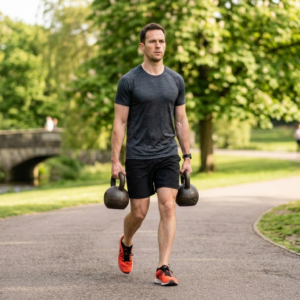
- Carry (grip + core stability)
Best functional strength exercises for longevity
| Movement Pattern | Why It Matters at 80 | Example Exercises | Frequency |
|---|---|---|---|
| Squat | Getting off chairs/toilets | Bodyweight squats, goblet squats | 2–3x/week |
| Hinge | Picking objects off floor | Romanian deadlifts, hip bridges | 2x/week |
| Push | Pushing doors, rising from floor | Incline push-ups, dumbbell press | 2x/week |
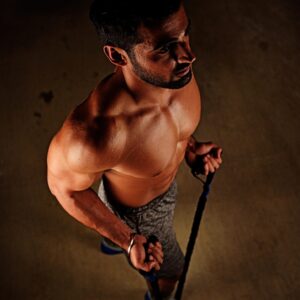
| Pull | Posture, shoulder health | Resistance band rows | 2–3x/week |
| Carry | Grocery bags, luggage | Farmer’s carries | 2x/week |
Tip: If you can sit on the floor and stand back up without using your hands, you’re ahead of the curve.
2. Prioritize Single-Leg Strength
Most daily movement happens one leg at a time walking, climbing stairs, stepping over obstacles.
Exercises to prevent falls and improve balance
- Split squats
- Step-ups
- Single-leg Romanian deadlifts
- Lateral lunges
- Heel-to-toe walks
Balance is a skill. If you don’t practice it, you lose it.
3. Don’t Neglect Rotation
Life isn’t linear. You twist to reach into the backseat, turn while carrying a child, or pivot to avoid slipping.
Most aesthetic programs avoid rotation. Functional training includes:
- Cable or band rotations
- Medicine ball throws (controlled)
- Woodchops
- Anti-rotation presses (Pallof press)
These build core stability in real-world planes of motion.
4. Build Grip Strength Your Silent Longevity Marker
Grip strength correlates strongly with overall vitality. It reflects:
- Neuromuscular coordination
- Upper-body strength
- Functional independence
Strength training for healthy aging at home
Simple additions:
- Farmer’s carries
- Dead hangs (assisted if needed)
- Towel squeezes
- Heavy grocery holds
If opening jars feels easy at 70, your training worked.
5. Train Getting Up and Down
This might be the most underrated skill.
Practice:
- Half-kneeling transitions
- Turkish get-ups (light weight)
- Floor-to-stand drills
The ability to move fluidly from the ground to standing is a direct indicator of independence.
Daily Routine Integration: What This Looks Like in Real Life
You don’t need two-hour gym sessions. You need consistency and intentionality.
Morning Routine (15–20 Minutes)
Goal: Wake up joints, activate stabilizers, prime balance.
- Cat-cow spinal flow – 1 minute
- Bodyweight squats – 10 reps
- Step-backs lunges – 8 each side
- Band rows – 12 reps
- Farmer’s carry around the house – 30 seconds
- Heel-to-toe balance walk – 1 minute
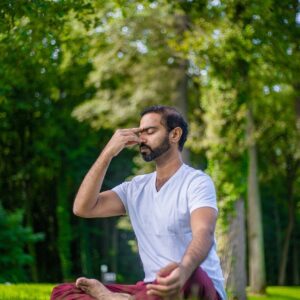
Finish with deep nasal breathing for 2 minutes.
Evening Routine (10–15 Minutes)
Goal: Maintain mobility and joint integrity.
- Hip flexor stretch – 1 minute each side
- Thoracic rotation stretch – 8 reps each side
- Glute bridges – 12 reps
- Light core anti-rotation hold – 20 seconds each side
Consistency beats intensity.
Functional Fitness Routine for Beginners Over 50 (Sample Weekly Plan)
| Day | Focus | Core Movements |
|---|---|---|
| Monday | Lower Body | Squats, step-ups, carries |
| Tuesday | Mobility | Rotation + balance drills |
| Wednesday | Upper Body | Push-ups, rows, grip holds |
| Thursday | Active Recovery | Walking + light stretches |
| Friday | Integrated Strength | Hinge, split squats, anti-rotation |
| Weekend | Outdoor Activity | Hiking, gardening, cycling |
How to Train for Mobility After 40
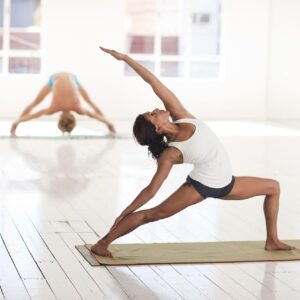
Mobility is strength through range not passive stretching alone.
Include:
- Controlled articular rotations
- Slow eccentric reps (3–4 seconds lowering)
- Deep squat holds
- Shoulder mobility circles
Aim to move joints through full, pain-free ranges regularly.
Nutritional & Fitness Synthesis: Food Supports Function
Strength doesn’t exist in isolation. Muscles repair with adequate nutrients.
Nutritional Priorities for Functional Aging
| Nutrient Focus | Why It Matters | Food Examples |
|---|---|---|
| Protein | Muscle repair | Greek yogurt, eggs, lentils |
| Omega-3s | Joint comfort | Salmon, chia seeds |
| Fiber | Gut health | Oats, berries |
| Magnesium | Muscle relaxation | Pumpkin seeds, spinach |
Pair each strength session with a protein-rich meal within a few hours. Hydrate consistently. Prioritize whole foods over ultra-processed options.
Movement tells your body to stay strong. Nutrition gives it the materials.
The Verdict: Train for the Life You Want at 80
Aesthetic goals aren’t the enemy. But they shouldn’t be the foundation.
If you want to move well at 80, train movements not mirrors.
Practice getting up from the floor. Carry awkward objects. Challenge your balance. Strengthen your grip.
Future you doesn’t care about arm definition under perfect lighting.
Future you cares about independence.
Start building that version today.
Quick FAQ
What is functional strength training?
Functional strength training focuses on movements that improve daily life activities like squatting, lifting, pushing, and balancing rather than isolating muscles for appearance. It enhances coordination, mobility, and stability to support long-term independence and healthy aging.
Is functional training better than aesthetic bodybuilding?
It depends on your goal. Aesthetic training builds muscle size and definition. Functional training prioritizes movement quality, balance, and real-world strength. For healthy aging and mobility, functional training offers broader long-term benefits.
How often should I train for longevity?
Most adults benefit from 3–4 weekly strength sessions that include squats, hinges, pushes, pulls, and balance work. Short daily mobility sessions can further support joint health and movement quality.
Can I start functional strength training after 50?
Yes. Many people begin in their 50s or later. Start with bodyweight exercises, controlled movements, and balance drills. Progress gradually and focus on consistency over intensity.
Does grip strength really matter for aging?
Yes. Grip strength reflects overall muscle function and coordination. It’s linked to independence and daily task performance. Farmer’s carries, hangs, and resistance exercises help maintain strong, capable hands.
If you’re training today, ask yourself one question:
“Will this help me move well at 80?”
If the answer is yes, you’re on the right path.