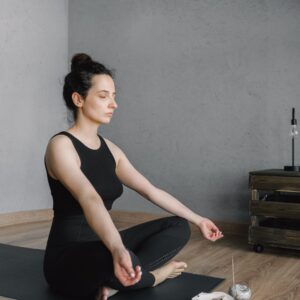

How to Build a 10-Minute Self-Care Routine Before Work That Actually Fits Your Morning
Mornings can become stressful before the workday has even started. Getting ready, checking messages, preparing food, commuting, and thinking about everything that needs to be done can leave little room for yourself.
The good news is that self-care does not have to take an hour. A 10-minute self-care routine before work can give you a short period to look after your body and mind before you begin dealing with the demands of the day.
A simple routine might include drinking water, gentle movement, taking a few slow breaths, washing and getting ready, eating something nourishing, or deciding what matters most that day. You do not need to do everything every morning. The goal is to choose a few habits that are realistic enough to repeat.
What Is a 10-Minute Self-Care Routine Before Work?
A 10-minute self-care routine before work is a short set of activities you do in the morning to support your physical and mental well-being before starting work.
It is not a strict checklist. Your routine can change depending on your schedule, energy level, responsibilities, and personal needs.
For example:
| Time | Activity | Purpose |
|---|---|---|
| 0–2 minutes | Drink water and open the curtains | Start the morning gently |
| 2–4 minutes | Gentle stretching or walking | Get your body moving |
| 4–6 minutes | Slow breathing | Create a calmer pause |
| 6–8 minutes | Wash and get ready | Basic personal care |
| 8–10 minutes | Set one priority for the day | Organize your attention |
You can also replace any activity that does not suit you. A useful routine is one that fits your actual life rather than one that looks impressive on paper.
Why Self-Care Before Work Can Be Useful
Self-care is sometimes treated as something that requires expensive products, long workouts, or a full day away from responsibilities. It does not.
Simple habits such as movement and relaxation can contribute to overall well-being. The World Health Organization notes that regular physical activity provides physical and mental health benefits and can help reduce symptoms of depression and anxiety in adults.
Relaxation practices can also help people manage stress. The National Center for Complementary and Integrative Health (NCCIH) says techniques such as deep breathing, progressive muscle relaxation, and mindfulness may help with stress, although the evidence varies depending on the technique and health problem.
That does not mean a 10-minute routine will eliminate stress or prevent every difficult morning. Instead, it gives you a small, repeatable opportunity to pay attention to yourself before work begins.
How to Build a 10-Minute Self-Care Routine Before Work
The easiest way to create a routine is to avoid trying to change your entire morning at once.
Choose two or three activities that are easy to repeat and assign them specific times.
1. Start With Two Minutes of Quiet
When you wake up, resist the urge to immediately fill your attention with notifications.
Sit somewhere comfortable, take a few slow breaths, or simply spend a minute noticing how you feel.
You can ask yourself:
- How am I feeling this morning?
- What do I need today?
- What is one thing I need to get done?
- Is there anything I can make easier for myself?
This does not need to become a formal meditation session. It is simply a short pause before the day gets busy.
Try simple breathing
Take slow, comfortable breaths without forcing them. Focus your attention on the movement of your breathing for a minute or two.
Research reviewed by NCCIH suggests that slow, deep breathing may have modest effects on stress and some physical measures, although more research is needed.
If focusing on your breathing makes you uncomfortable or increases anxiety, stop and choose another calming activity.
2. Spend Two Minutes Moving
You do not need to complete a full workout before work.
Try gentle movements such as:
- Walking around your room or compound
- Shoulder rolls
- Gentle arm movements
- Easy stretching
- Walking up and down a hallway
- A few comfortable mobility exercises
The purpose is simply to get your body moving.
Regular physical activity is associated with a range of physical and mental health benefits, according to the WHO.
There is also no need to turn these two minutes into an intense exercise session. If you have an injury, medical condition, or movement restriction, choose activities that are appropriate for you or ask a qualified healthcare professional for advice.
READ MORE ON
3. Spend Two Minutes on Basic Personal Care
Self-care can be very ordinary.
Brush your teeth, wash your face, shower if you have time, comb your hair, or put on clean clothes.
These simple actions can help create a clear boundary between waking up and starting your day.
If you are rushing, choose the essentials rather than trying to create a complicated skincare or grooming routine.
4. Use One Minute to Check Your Needs
Before work takes over your attention, quickly consider your basic needs.
Ask yourself:
Have I had some water?
Am I hungry?
Do I need to prepare something to eat?
Do I need to take prescribed medication according to my healthcare provider’s instructions?
The point is not to create another list of tasks. It is to notice what your body needs before you become absorbed in work.
If breakfast is part of your normal eating pattern, choose something practical and nourishing that works for you. There is no single breakfast that everyone needs to eat.
5. Use the Final Three Minutes to Choose Your Priority
A long to-do list can make a morning feel crowded before work even begins.
Instead, choose one important task for the day.
For example:
“My main priority today is to finish the report.”
You can then identify one or two smaller tasks if necessary.
A simple structure is:
- Most important: What needs my attention first?
- Next: What should I do after that?
- Later: What can wait?
This can make your morning feel more organized without requiring a complicated productivity system.
A Simple 10-Minute Morning Self-Care Routine
If you want something you can start tomorrow, try this version:
Minute 1–2: Pause
Sit quietly and take several slow, comfortable breaths.
Minute 3–4: Move
Stretch gently or walk around.
Minute 5–6: Hydrate
Drink some water and notice whether you need food or other basic care.
Minute 7–8: Get ready
Complete a simple personal-care task such as brushing your teeth, washing your face, or getting dressed.
Minute 9–10: Set your focus
Choose your most important task and think about how you want to approach the day.
That’s it.
You do not need to add ten more habits simply because you have seen elaborate morning routines online.
How to Make Your 10-Minute Self-Care Routine Easier to Maintain
The biggest challenge is usually not creating a routine. It is remembering to do it consistently.
Keep the routine short
If your routine regularly takes 25 minutes, it is no longer a 10-minute routine.
Choose activities that fit comfortably into your morning.
Prepare the night before
A few minutes of preparation can make the morning easier.
You could:
- Put your work clothes somewhere easy to find.
- Prepare items you need for work.
- Decide what you will eat.
- Pack your bag.
- Write down tomorrow’s most important task.
This leaves less decision-making for the morning.
Keep your phone from taking over the routine
Checking messages first thing can quickly turn a 10-minute pause into 30 minutes of scrolling.
You do not necessarily need to avoid your phone completely. Instead, consider delaying social media, unnecessary notifications, or work messages until after your self-care routine.
Have a backup version
Some mornings will not go according to plan.
If you oversleep, use a two-minute version:
30 seconds: Take a few calm breaths.
30 seconds: Stretch or move.
30 seconds: Drink some water.
30 seconds: Decide your main priority.
A shortened routine is better than abandoning the habit because you could not do the full version.
What to Avoid in a Morning Self-Care Routine
A self-care routine should make your morning more manageable, not create another source of pressure.
Avoid:
- Trying to copy someone else’s entire morning routine
- Setting unrealistic expectations
- Turning every morning into an intense workout
- Skipping necessary medical care
- Using self-care as a substitute for professional treatment
- Feeling guilty when you miss a day
- Spending most of your 10 minutes scrolling through social media
There is no prize for having the most complicated morning.
A routine that takes 10 minutes and fits your life is more practical than an elaborate routine you cannot maintain.
Should You Exercise During a 10-Minute Morning Routine?
You can include movement, but you do not have to treat the 10 minutes as a workout.
A short walk or gentle stretching may be enough to get you moving. The WHO recommends regular physical activity for health, but your total activity can come from different parts of the day rather than one morning session.
If you enjoy exercise in the morning, you can build a longer workout into your schedule separately.
Can Mindfulness Be Part of Self-Care Before Work?
Yes. A short period of mindfulness can be one option.
Mindfulness involves deliberately paying attention to the present moment rather than automatically moving from one thought or task to another. Research suggests mindfulness practices may help with perceived stress and some anxiety symptoms, although the evidence is not uniform and mindfulness should not be presented as a replacement for appropriate mental-health treatment.
For a busy morning, even one or two quiet minutes may be enough to create a pause.
A 10-Minute Routine for Different Types of Mornings
Your routine does not have to look the same every day.
| Morning situation | Try this |
|---|---|
| You woke up tired | Water, gentle movement, basic hygiene |
| You feel stressed | Slow breathing, quiet time, one clear priority |
| You have very little time | Two-minute backup routine |
| You work from home | Stretch, wash up, step away from your phone, plan your first task |
| You have a long commute | Prepare calmly and use a few minutes for breathing before leaving |
| You feel mentally scattered | Write down your top priority and postpone nonessential tasks |
The best version is the one that responds to what you actually need.
Frequently Asked Questions (FAQ)
Is 10 minutes of self-care enough?
Ten minutes is enough to create a short self-care habit, but it should not be viewed as a complete solution for every health or stress-related concern. The purpose is to create a manageable daily pause rather than solve every problem in 10 minutes.
What should I do first in the morning for self-care?
Start with something simple that helps you transition into the day. This could be drinking water, washing up, gentle movement, or sitting quietly for a minute. Choose what feels useful and realistic for you.
Can I do a 10-minute self-care routine if I wake up late?
Yes. Use a shorter version instead of skipping it completely. Even one or two minutes of breathing, movement, or planning can provide a brief pause before you start work.
Does morning exercise reduce stress?
Regular physical activity is associated with mental-health benefits, including reductions in symptoms of depression and anxiety. However, a two-minute morning movement session should not be described as a treatment for a mental-health condition.
Should I check my phone during my morning routine?
You can, but delaying nonessential notifications may help you protect the short period you have set aside for yourself. If checking your phone consistently turns 10 minutes into a long period of scrolling, consider leaving notifications until after your routine.
Can breathing exercises be part of self-care?
Yes. Slow, deep breathing is one relaxation technique that has been studied for stress. Evidence suggests it may provide modest benefits for stress, although it is not a treatment for every condition.

Ricki Hewitt is an advice, support, mental health, and inclusion professional with over eight years of experience across higher education, healthcare, and the voluntary sector. With a career built on the belief that inclusive environments empower people to truly thrive, Ricki brings a depth of knowledge and compassion to every aspect of their work.
Specialising in supporting individuals with disabilities, neurodivergence, mental health conditions, and complex personal circumstances, Ricki has developed a holistic, person-centred approach rooted in pastoral care, safeguarding, casework, and tailored learning support. Their work is guided by a commitment to improving wellbeing, retention, engagement, and progression by embedding accessibility and inclusion into every stage of the human experience.
Throughout their career, Ricki has worked across universities, healthcare services, and community organisations, delivering meaningful change through evidence-based support, inclusive practice, and collaborative working. Their extensive expertise spans disability support, reasonable adjustments, safeguarding, mental health interventions, equality, diversity, inclusion and belonging (EDIB), widening participation, and multi-agency partnership working.
Beyond frontline support, Ricki has led impactful projects and initiatives focused on accessibility, student engagement, LGBT+ inclusion, and organisational culture change demonstrating a commitment to systemic, lasting transformation rather than surface-level fixes.
At Switch to Nature (switchtonature.com), Ricki draws on this wealth of professional experience to explore the powerful relationship between nature, wellbeing, and inclusive living. Driven by the conviction that inclusive practice should be proactive, compassionate, and embedded within culture rather than treated as an afterthought, Ricki writes to help people from all backgrounds feel seen, supported, and genuinely empowered.
Whether through individual stories, evidence-informed insights, or practical guidance, Ricki’s writing reflects a lifelong dedication to creating equitable, human-centred spaces both online and in the world.
Connect with Ricki and explore more at: www.switchtonature.com