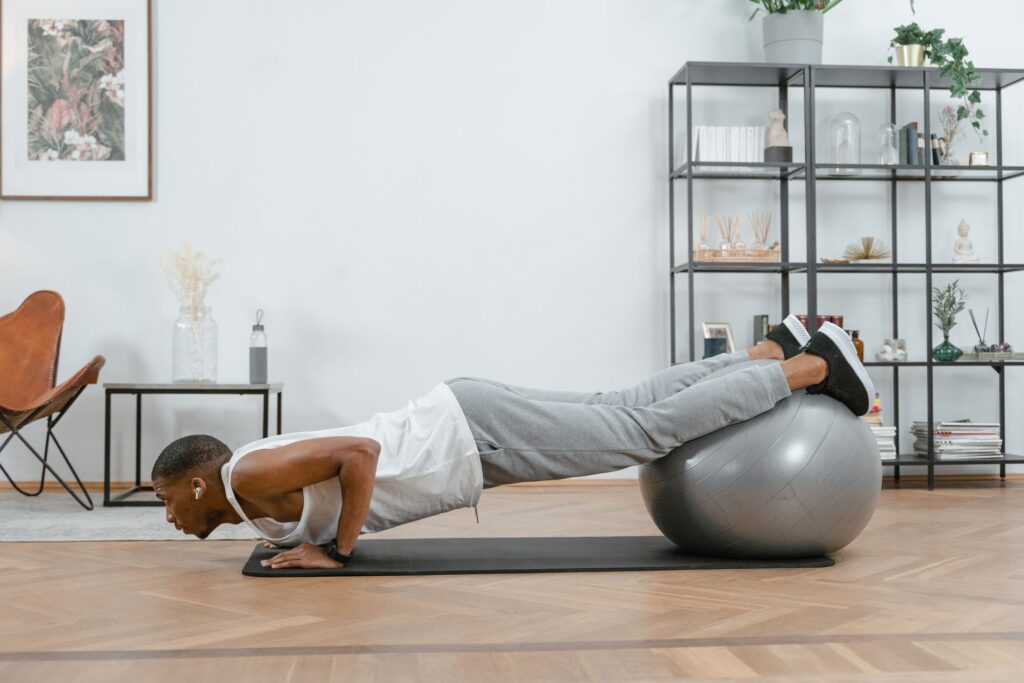
Bodyweight Exercises for Beginners: A Simple At-Home Strength Workout
You do not need a gym membership, expensive equipment, or hours of free time to begin building strength. If you can spare 15-20 minutes at home and have enough space to move safely, you can start with simple exercises that use your own body weight as resistance.
For beginners, the challenge is often knowing which exercises to choose, how many repetitions to perform, and how to avoid doing too much too soon. A complicated workout plan can be difficult to follow, especially if you have not exercised regularly.
Bodyweight exercises for beginners offer a practical way to build strength, improve movement, and develop a consistent fitness routine at home. Exercises such as chair squats, wall push-ups, glute bridges, and standing calf raises can help you work different muscle groups without purchasing weights or fitness machines.
This guide explains how bodyweight training works, which exercises to start with, how to perform them correctly, and how to organize them into a simple weekly routine. It also covers common mistakes, beginner-friendly modifications, and basic safety precautions.
What Are Bodyweight Exercises?
Bodyweight exercises are movements that use your own body as resistance instead of relying on dumbbells, barbells, or weight machines. Your muscles work against the resistance created by your body as you push, pull, squat, hold a position, or move between different positions.
Common examples include squats, push-ups, lunges, planks, and glute bridges.
Some exercises are challenging enough for experienced athletes, while others can be adjusted for people who are new to physical activity. For instance, a beginner can perform push-ups against a wall before progressing to push-ups from the floor.
Bodyweight training is useful because it requires little equipment and can be adapted to different fitness levels. You generally need a clear floor area, comfortable clothing, and a stable chair for certain exercises.
The main goal at the beginning is not to complete as many repetitions as possible. It is to learn the movements, develop control, and gradually make the exercises more challenging as your strength improves.
Benefits of Bodyweight Exercises for Beginners
A simple home workout can support several aspects of physical fitness. The benefits depend on your starting fitness level, how regularly you exercise, and whether your routine challenges your muscles sufficiently.
1. They help build muscle strength
Exercises such as squats, push-ups, and glute bridges require your muscles to produce force. Practising them regularly can improve your ability to perform similar movements in everyday life.
For example, squats train movements used when standing up from a chair, while push-ups strengthen muscles involved in pushing objects away from your body.
You can start with easier variations and gradually progress to more demanding versions as your ability improves.
2. They support everyday movement
Strength is useful beyond a workout session. Getting out of bed, carrying shopping bags, climbing stairs, and standing up after sitting for a long time all require muscular effort.
A balanced bodyweight routine can help develop strength in the legs, hips, chest, shoulders, arms, and abdominal muscles. Exercises that challenge your balance and coordination may also help you move with greater control.
3. They are convenient and affordable
Not everyone has access to a gym, fitness equipment, or a safe outdoor exercise area. Home workouts reduce some of these barriers.
You can exercise in a living room, bedroom, or another uncluttered space. A sturdy chair can support certain beginner movements, and a folded exercise mat or non-slip surface may make floor exercises more comfortable.
Convenience does not automatically guarantee consistency, but a short routine that fits your schedule may be easier to maintain than one that requires travel and complicated preparation.
4. They can support long-term health
Regular physical activity supports physical and mental health. For adults, the World Health Organization recommends 150-300 minutes of moderate-intensity aerobic activity each week, or an equivalent amount of vigorous activity, alongside muscle-strengthening activities involving the major muscle groups on at least two days per week.
Bodyweight exercises can contribute to the muscle-strengthening part of this recommendation. Walking, cycling, dancing, and similar activities can help you work toward the aerobic activity recommendation.
You do not need to meet the full weekly target immediately. If you are currently inactive, beginning with manageable amounts and increasing gradually is a sensible approach.
Source: World Health Organization – WHO Guidelines on Physical Activity and Sedentary Behaviour.
5. They make progress easier to track
You can measure improvement without a fitness tracker or gym equipment. Perhaps you can complete five controlled chair squats this week but manage eight next week. You might also find that wall push-ups feel easier or that you can hold a plank for a few seconds longer.
These small changes provide useful feedback about your training. They do not guarantee a particular physical transformation, but they can help you decide when to increase the difficulty of an exercise.
7 Bodyweight Exercises for Beginners to Try at Home
The following exercises provide a starting point for a general beginner workout. You do not need to perform every exercise perfectly on your first day. Choose variations that allow you to move comfortably and maintain control.
1. Chair Squats
Muscles worked: Thighs, hips, and buttocks.
Chair squats are a practical starting point if you are learning how to squat or find it difficult to lower your body comfortably.
How to do them:
- Place a sturdy chair against a wall so it cannot slide.
- Stand in front of it with your feet approximately hip-width apart.
- Keep your chest comfortably lifted and your feet flat on the floor.
- Bend your knees and hips slowly, moving backward as if you were about to sit down.
- Lightly touch the chair with your buttocks, then press through your feet to stand.
- Repeat at a controlled pace.
Beginner target: 6-10 repetitions.
If sitting down and standing up is difficult, use your hands on the chair arms or another stable support. You can also begin with a higher seat, provided it is stable.
Avoid dropping quickly onto the chair, allowing your knees to collapse inward, or forcing yourself into a depth that causes pain.
2. Wall Push-Ups
Muscles worked: Chest, shoulders, and triceps, which are the muscles at the back of the upper arms.
Wall push-ups train the pushing movement used in a traditional push-up while allowing you to support less of your body weight.
How to do them:
- Stand facing a wall, approximately an arm’s length away.
- Place your palms against the wall at about chest height, slightly wider than shoulder-width.
- Keep your body aligned from head to heels.
- Bend your elbows slowly and bring your chest toward the wall.
- Push through your hands to return to the starting position.
Beginner target: 6-10 repetitions.
Move your feet farther from the wall to increase the challenge slightly, or stand closer to make the exercise easier.
Keep your body controlled rather than bending at the waist. Stop the movement before your shoulders or wrists become uncomfortable.
3. Glute Bridges
Muscles worked: Buttocks, hips, and the muscles at the back of the thighs.
Glute bridges are performed on the floor and help strengthen the muscles that extend your hips.
How to do them:
- Lie on your back with your knees bent and feet flat on the floor.
- Place your arms beside your body.
- Tighten your abdominal muscles gently.
- Press through your feet and lift your hips until your shoulders, hips, and knees form a roughly straight line.
- Pause briefly without arching your lower back excessively.
- Lower your hips slowly.
Beginner target: 8-12 repetitions.
The movement should come from your hips rather than from pushing your stomach upward and arching your back. If lying on the floor is uncomfortable or difficult, choose another suitable exercise or seek guidance on an appropriate modification.
4. Standing Calf Raises
Muscles worked: Calf muscles at the back of the lower legs.
Calf raises strengthen the muscles involved in pushing through your feet when walking, climbing stairs, or standing on your toes.
How to do them:
- Stand with your feet about hip-width apart.
- Place your hands lightly on a sturdy chair or countertop for balance.
- Lift both heels off the floor while keeping the balls of your feet planted.
- Pause briefly at the top.
- Lower your heels slowly.
Beginner target: 8-12 repetitions.
Avoid bouncing or rushing through the movement. Keep your weight distributed comfortably across your feet and use the support for balance rather than pulling yourself upward.
As your control improves, you may be able to perform the movement with less support.
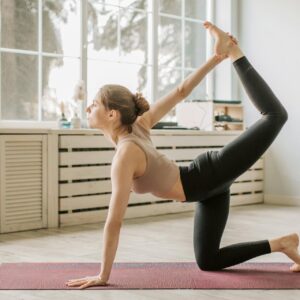
5. Bird Dogs
Muscles worked: Abdominal muscles, back muscles, and muscles around the hips and shoulders.
Bird dogs train you to control your trunk while moving your arms and legs. They can be a useful addition to a beginner routine focused on overall movement control.
How to do them:
- Start on your hands and knees on a comfortable, non-slip surface.
- Position your hands under your shoulders and your knees under your hips.
- Gently tighten your abdominal muscles.
- Extend one arm forward while extending the opposite leg backward, if you can do so without twisting your body.
- Pause briefly, then return to the starting position.
- Repeat on the opposite side.
Beginner target: 5-8 repetitions per side.
If extending an arm and leg together feels too difficult, move only one arm or one leg at a time. This reduces the coordination challenge while allowing you to practise controlled movement.
Avoid lifting your leg so high that your lower back arches or your hips rotate significantly.
6. Modified Plank
Muscles worked: Abdominal muscles, shoulders, and other muscles that help stabilize the trunk.
A plank involves holding your body in a controlled position rather than repeatedly moving through a range of motion.
How to do a beginner version:
- Lie face down on a mat or comfortable floor surface.
- Place your forearms on the floor and position your elbows under your shoulders.
- Lift your torso while keeping your knees on the floor.
- Keep your body aligned from your head through your hips to your knees.
- Breathe normally while holding the position.
- Lower yourself gently when you can no longer maintain good form.
Beginner target: Hold for 10-20 seconds.
Do not hold your breath or allow your lower back to sag. A shorter hold with good control is more useful than a longer hold performed with poor technique.
If kneeling is uncomfortable, a standing wall-based abdominal brace may be a more suitable starting option.
7. Standing Hip Extensions
Muscles worked: Buttocks and muscles around the hips.
Standing hip extensions provide a simple way to work the muscles at the back of the hips without getting down on the floor.
How to do them:
- Stand behind a sturdy chair or beside a stable countertop.
- Hold the support lightly for balance.
- Keep your torso upright and your standing knee slightly relaxed.
- Move one leg backward a short distance without leaning forward or arching your back.
- Return your foot to the starting position.
- Repeat on the other side.
Beginner target: 8-10 repetitions per leg.
The movement does not need to be large. Focus on using your hip muscles rather than swinging your leg or bending your lower back.
This is a useful alternative for people who prefer standing exercises to floor-based movements.
A Simple 15-20 Minute Bodyweight Workout for Beginners
Once you understand the exercises, you can combine them into one short routine. The following plan works several major muscle groups and requires no gym equipment.
1. Warm up for 3-5 minutes
Begin with easy movements that gradually raise your activity level. For example:
- March gently on the spot for one minute.
- Roll your shoulders forward and backward.
- Swing your arms comfortably.
- Take a few controlled steps from side to side.
- Perform a few shallow, comfortable knee bends.
The warm-up should prepare you for the workout, not tire you out. If you feel unusually breathless or uncomfortable during these easy movements, slow down or stop.
2. Complete the main workout
Perform the exercises in the order below. Rest for approximately 30-60 seconds between exercises, or longer if you need it to recover.
| Exercise | Beginner target |
|---|---|
| Chair squats | 6-10 repetitions |
| Wall push-ups | 6-10 repetitions |
| Glute bridges | 8-12 repetitions |
| Standing calf raises | 8-12 repetitions |
| Bird dogs | 5-8 repetitions per side |
| Modified plank | 10-20 seconds |
| Standing hip extensions | 8-10 repetitions per leg |
Begin with one round. If you can complete it with controlled movements and feel ready for more, you may gradually work toward a second round on a later session.
You do not need to rush between exercises. Take enough rest to maintain good technique throughout the routine.
3. Finish with gentle movement
Spend two or three minutes walking slowly around the room and allowing your breathing to settle. You can add gentle stretches if they feel comfortable, but do not force a joint into an uncomfortable position.
Drink water according to your needs, particularly if the room is hot or you have been sweating.
A realistic weekly schedule
Beginners can start with two non-consecutive strength-training days each week. This gives you time between sessions to recover while establishing a routine.
| Day | Suggested activity |
|---|---|
| Monday | Beginner bodyweight workout |
| Tuesday | Comfortable walk or usual daily movement |
| Wednesday | Rest or gentle activity |
| Thursday | Beginner bodyweight workout |
| Friday | Comfortable walk or other enjoyable activity |
| Saturday | Walking, dancing, cycling, or another suitable activity |
| Sunday | Rest or gentle movement |
Adjust the schedule to fit your work, family responsibilities, fitness level, and recovery needs. If two workouts feel too demanding at first, begin with one shorter session and build up gradually.
The weekly plan is a starting example, not a requirement to exercise every day.
How Often Should Beginners Do Bodyweight Exercises?
For most healthy adults, muscle-strengthening activity on at least two days each week is a useful general target. The exercises should involve the major muscle groups, including the legs, hips, back, abdomen, chest, shoulders, and arms.
You do not need to train every muscle group with a separate exercise. A carefully selected full-body routine can cover several of these areas in one session.
Leave time for recovery between challenging sessions, especially when you are new to exercise. If your muscles are very sore or your normal movement is affected, reduce the next workout’s difficulty or allow more recovery time.
Remember that strength training is only one part of physical activity. Walking and other aerobic activities contribute different benefits and should be included as your fitness and schedule allow.
The CDC’s adult physical activity guidance explains the recommended combination of aerobic and muscle-strengthening activities.
How to Make Bodyweight Exercises More Challenging
Your body adapts to repeated exercise. Over time, a routine that initially feels difficult may become easier. You can then increase the challenge gradually rather than immediately switching to advanced movements.
Increase repetitions gradually
If you can perform six chair squats comfortably, you might work toward eight or ten repetitions over several sessions.
Increase the number only when you can maintain control and finish without pain. There is no need to add repetitions every workout.
Improve movement control
Slowing down the lowering phase of a squat or push-up can make the movement more demanding without requiring additional equipment.
For example, take two or three seconds to lower yourself toward the chair rather than dropping quickly into the seated position.
Try a harder variation
When wall push-ups become comfortable, you might progress to push-ups against a sturdy kitchen counter. Later, if your strength and control allow, you could try a lower support.
For squats, you may gradually reduce how much you rely on the chair. For planks, you can increase the hold a few seconds at a time.
Change one aspect of an exercise at a time. This makes it easier to judge whether the new level is appropriate.
Keep a simple exercise record
Write down the exercise, the number of repetitions, and how difficult it felt. A phone note or notebook is enough.
For example:
- Week 1: Wall push-ups, 6 repetitions.
- Week 2: Wall push-ups, 8 repetitions.
- Week 3: Wall push-ups, 10 repetitions.
This record helps you see progress without relying on body weight or appearance as the only measures of improvement.
Common Mistakes Beginners Should Avoid
Doing too much on the first day
Trying to complete several rounds of every exercise can cause excessive fatigue and make it harder to return for the next session.
Start with one round. You can add more work when your body tolerates the routine comfortably.
Copying advanced workout videos
A fitness video may include jumping squats, burpees, full push-ups, or long planks. These exercises are not automatically better than beginner variations.
Choose movements that match your current ability. An exercise is useful when it provides an appropriate challenge and you can perform it safely.
Sacrificing technique for more repetitions
Fast, uncontrolled repetitions may make it harder to maintain balance and proper movement.
For most beginner exercises, use a steady pace, breathe normally, and stop the set when you can no longer maintain good form.
Ignoring recovery
Muscles need time to recover after challenging exercise. Training hard every day is not necessary for beginners and may make soreness or fatigue harder to manage.
Allow recovery between demanding sessions and adjust your schedule if you are not feeling ready for another workout.
Expecting rapid physical changes
Strength, balance, and exercise tolerance can improve at different rates. Changes in muscle size or body composition also depend on factors such as training consistency, nutrition, sleep, genetics, and starting fitness.
Avoid judging the value of your workout solely by how quickly your appearance changes. Being able to move with better control or complete an exercise more comfortably is also meaningful progress.
Safety Tips Before Starting a Home Workout
Bodyweight exercises are accessible, but they still place demands on muscles, joints, and the cardiovascular system.
Before starting, clear the floor of loose rugs, cables, toys, or other objects that could cause you to trip. Use a chair that is stable and will not slide. Wear clothing that allows you to move freely, and keep water nearby.
Start at a manageable pace. Mild muscle effort can be expected, particularly when an exercise is unfamiliar, but sharp pain is not something to push through.
Stop exercising if you develop chest pain, faintness, severe or unusual breathlessness, or sudden severe pain. Seek urgent medical attention for serious or persistent symptoms.
If you have a heart condition, significant joint problems, a balance disorder, a recent injury or operation, or another condition that may affect exercise, speak with a qualified healthcare professional about suitable activities. People who are pregnant or returning to exercise after childbirth may also need modifications appropriate to their circumstances.
Older adults and people who have difficulty standing, kneeling, or getting down to the floor should select supported variations that match their mobility and balance. A physiotherapist or other appropriately qualified professional can help identify suitable movements when necessary.
The aim is to develop a routine you can perform comfortably and consistently, not to force your body through movements that do not suit your current ability.
Frequently Asked Questions
1. Can I build strength with bodyweight exercises alone?
Yes. Bodyweight exercises can improve strength when the movements challenge your muscles sufficiently and become progressively more demanding as your ability improves.
Beginners may make progress with chair squats, wall push-ups, glute bridges, and other simple exercises. As you become stronger, you may need harder variations or additional resistance to continue challenging your muscles.
2. How long should a beginner bodyweight workout last?
A short session of approximately 15-20 minutes can be a practical starting point, including a warm-up and brief cool-down. Some beginners may need less time, especially during the first few sessions.
The appropriate duration depends on your fitness level, the exercises you choose, and the amount of rest you need. Good technique and a manageable workload matter more than completing a fixed number of minutes.
3. Should I exercise every day as a beginner?
You do not need to perform a full-body strength workout every day. Two non-consecutive strength-training days each week are a sensible starting target for many healthy adults.
Walking and other comfortable activities can be done on other days, depending on your health, energy, and recovery. If you feel unusually fatigued or sore, adjust the intensity and allow more time to recover.
4. Can bodyweight exercises help with weight management?
They can contribute to a broader weight-management plan because physical activity uses energy and helps maintain or develop muscle strength. However, changes in body weight depend on several factors, including food intake, overall activity, sleep, health, and individual differences.
Bodyweight training alone does not guarantee weight loss. A balanced approach that includes suitable physical activity and sustainable eating habits is more realistic than expecting a particular exercise to produce a specific result.
5. Do I need equipment for beginner bodyweight exercises?
No special fitness equipment is required for the exercises in this routine. A stable chair and a clear, non-slip floor area are sufficient for most of them.
You may choose to use an exercise mat for comfort, but it is optional. Avoid using unstable furniture or improvised supports that could slip or tip during a movement.
6. What should I do if an exercise feels too difficult?
Choose an easier variation, reduce the repetitions, or shorten the hold. For example, use wall push-ups instead of floor push-ups, perform chair squats with hand support, or extend one limb at a time during bird dogs.
If an exercise causes pain rather than ordinary muscular effort, stop and reconsider the movement. Persistent pain or difficulty performing basic movements warrants advice from a qualified healthcare professional.
Conclusion
Bodyweight exercises offer a straightforward way for beginners to start strength training at home without purchasing weights or joining a gym. Chair squats, wall push-ups, glute bridges, calf raises, bird dogs, modified planks, and standing hip extensions provide a practical starting point for working several major muscle groups.
Begin with one round of the routine, rest whenever needed, and aim for two manageable strength sessions per week as your ability allows. Increase repetitions or difficulty gradually instead of trying to do everything at once.
For your first workout, choose a clear space, prepare a stable chair, and try the exercises at a comfortable place. Record what you complete so you can make sensible adjustments over the following weeks. A routine that suits your current fitness level is more useful than an advanced programme you cannot perform comfortably or maintain.

Ricki Hewitt is an advice, support, mental health, and inclusion professional with over eight years of experience across higher education, healthcare, and the voluntary sector. With a career built on the belief that inclusive environments empower people to truly thrive, Ricki brings a depth of knowledge and compassion to every aspect of their work.
Specialising in supporting individuals with disabilities, neurodivergence, mental health conditions, and complex personal circumstances, Ricki has developed a holistic, person-centred approach rooted in pastoral care, safeguarding, casework, and tailored learning support. Their work is guided by a commitment to improving wellbeing, retention, engagement, and progression by embedding accessibility and inclusion into every stage of the human experience.
Throughout their career, Ricki has worked across universities, healthcare services, and community organisations, delivering meaningful change through evidence-based support, inclusive practice, and collaborative working. Their extensive expertise spans disability support, reasonable adjustments, safeguarding, mental health interventions, equality, diversity, inclusion and belonging (EDIB), widening participation, and multi-agency partnership working.
Beyond frontline support, Ricki has led impactful projects and initiatives focused on accessibility, student engagement, LGBT+ inclusion, and organisational culture change demonstrating a commitment to systemic, lasting transformation rather than surface-level fixes.
At Switch to Nature (switchtonature.com), Ricki draws on this wealth of professional experience to explore the powerful relationship between nature, wellbeing, and inclusive living. Driven by the conviction that inclusive practice should be proactive, compassionate, and embedded within culture rather than treated as an afterthought, Ricki writes to help people from all backgrounds feel seen, supported, and genuinely empowered.
Whether through individual stories, evidence-informed insights, or practical guidance, Ricki’s writing reflects a lifelong dedication to creating equitable, human-centred spaces both online and in the world.
Connect with Ricki and explore more at: www.switchtonature.com