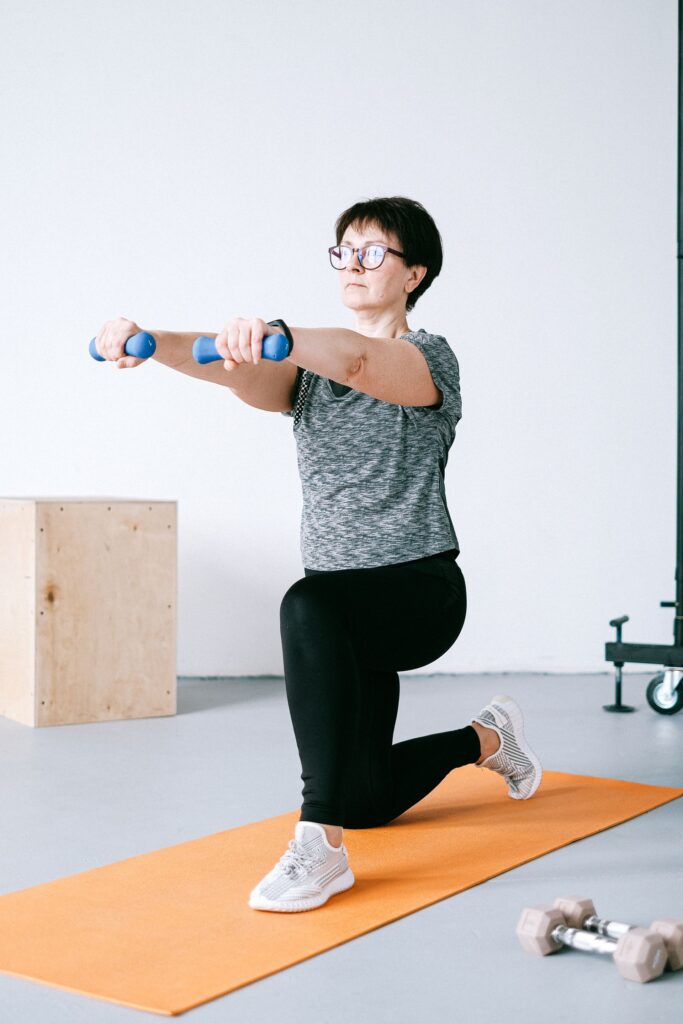
Strength Training for Women Over 40: Where to Start for Stronger, Fitter, More Confident Years Ahead
If you’ve spent most of your adult life thinking of exercise as walking, jogging, aerobics, or simply trying to stay active, strength training can feel like unfamiliar territory after 40. What equipment should you use? How heavy should the weights be? Do you need a gym? And is it really necessary if you’re already walking regularly?
The short answer is that resistance exercise deserves a place in your routine.
Your 40s can bring changes in muscle strength, recovery, body composition, and, for many women, the transition toward menopause. That doesn’t mean your body suddenly stops responding to exercise. Quite the opposite: a well-planned strength routine can give you a practical way to keep challenging your muscles and maintain physical capacity.
Research involving postmenopausal women has found that resistance training can improve measures of upper- and lower-body strength and physical fitness. Other research has also found increases in lean body mass among postmenopausal and older women who participate in resistance training.
The key is knowing where to begin.
This guide walks you through the basics of strength training for women over 40, including which exercises to choose, how often to train, how to progress safely, common mistakes to avoid, and how to build a routine that can actually fit around work, family, and everyday life.
Why Strength Training Matters More Than You Might Think After 40
Strength training isn’t simply about building bigger muscles.
Think about the ordinary things you do without giving them much thought: carrying shopping bags, climbing stairs, lifting a suitcase, getting up from a low chair, picking something up from the floor, or moving furniture around the house.
All of those activities require strength.
The goal of resistance training is to make your muscles capable of handling those demands more comfortably.
Muscle and strength naturally deserve more attention with age
Muscle doesn’t disappear overnight when you turn 40. Changes tend to happen gradually, and lifestyle, activity levels, nutrition, genetics, hormones, and previous exercise habits all influence how much muscle and strength a person maintains.
This is one reason strength training becomes particularly useful in midlife. You’re giving your muscles a reason to keep adapting.
A meta-analysis of resistance-training studies involving postmenopausal and older women found small-to-moderate improvements in lean body mass following resistance training.
That’s a useful reminder: you don’t have to be an experienced lifter to benefit.
Bone health is another reason to lift
Bones respond to mechanical loading. Resistance exercise is therefore often included in broader strategies for maintaining skeletal health.
Recent research has found that resistance training can improve bone mineral density at several sites in postmenopausal women, although researchers also point out that differences between studies make it difficult to prescribe one perfect program for everyone.
That doesn’t mean you need to immediately start lifting very heavy weights.
For a beginner, the smarter approach is to learn good movement patterns, build consistency, and gradually increase resistance.
Strength isn’t the same as looking muscular
This is worth saying because some women hesitate to start lifting weights because they’re worried about becoming “too muscular.”
A basic strength program isn’t automatically a bodybuilding program.
Your training goals, exercise selection, resistance, volume, nutrition, genetics, and consistency all influence the results you get. For many women starting in their 40s, the more noticeable benefits are simply feeling stronger, moving with greater confidence, and finding everyday physical tasks easier.
The Best Starting Point: Two Full-Body Workouts a Week
If you’re wondering how often women over 40 should strength train, start simple.
Current U.S. physical-activity guidance recommends that adults perform muscle-strengthening activities on at least two days each week, working all major muscle groups. Adults are also advised to get at least 150 minutes of moderate-intensity aerobic activity per week.
You don’t have to begin with five gym sessions.
Two well-planned full-body workouts can give you a strong foundation.
For example:
- Monday: Full-body strength
- Tuesday: Walking or another enjoyable activity
- Wednesday: Rest or light movement
- Thursday: Full-body strength
- Friday: Walking
- Saturday: Optional recreational activity
- Sunday: Rest or gentle movement
The schedule isn’t sacred. If Tuesday and Saturday work better for your life, use those days.
Consistency beats a perfect schedule you can’t maintain.
The 6 Movement Patterns Every Beginner Should Learn
Instead of memorizing dozens of exercises, start by understanding basic movement patterns.
This makes it easier to build a balanced beginner strength-training routine.
1. Squat
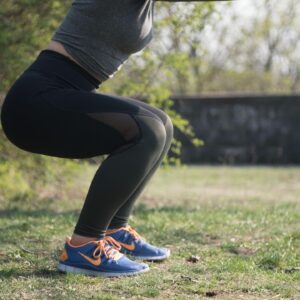
A squat trains the muscles around your thighs, hips, and lower body.
A beginner can start with a chair squat. Stand in front of a sturdy chair, lower yourself toward it with control, lightly touch the seat, then stand again.
Once that becomes comfortable, you can progress to bodyweight squats and eventually add resistance.
2. Hip hinge
The hip hinge teaches you how to bend from the hips rather than repeatedly rounding your lower back.
A simple hip-hinge drill can be practiced without weights. Once you’ve learned the movement, exercises such as Romanian deadlifts can become useful options.
3. Push
Push movements train the chest, shoulders, and triceps.
A beginner doesn’t have to start with floor push-ups.
Try wall push-ups or an elevated push-up using a stable surface. As your strength improves, gradually lower the height.
4. Pull
Pulling exercises train the muscles of your back and arms.
Resistance bands, cable machines, or dumbbells can all be used for movements such as rows.
A supported dumbbell row is a practical option because you can concentrate on controlling the weight rather than trying to balance it.
5. Carry
Carrying weights may look almost too simple to count as exercise.
It isn’t.
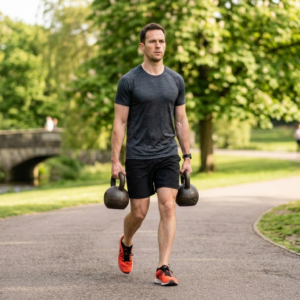
A farmer’s carry, where you walk while holding manageable weights at your sides, challenges your grip and trunk while teaching you to maintain good posture under load.
6. Core stability
Your core isn’t just your abdominal muscles.
It includes muscles that help stabilize your trunk while you move.
Beginner-friendly options include controlled dead bugs, bird dogs, and appropriately scaled plank variations.
The goal isn’t to hold a plank for as long as possible. Quality matters more than a dramatic time record.
A Simple Strength Training Routine for Women Over 40
You can use the following structure as a starting template. Adjust the exercises and resistance to your current ability.
| Movement | Beginner Exercise | Starting Sets | Suggested Reps |
|---|---|---|---|
| Squat | Chair or bodyweight squat | 2 | 8-12 |
| Hip hinge | Light Romanian deadlift | 2 | 8-12 |
| Push | Wall or incline push-up | 2 | 8-12 |
| Pull | Resistance-band or dumbbell row | 2 | 8-12 |
| Carry | Farmer’s carry | 2 | 20-40 seconds |
| Core | Bird dog or dead bug | 2 | 6-10 each side |
This isn’t a test.
If eight controlled repetitions are difficult, don’t force yourself to reach 12. If 12 repetitions feel extremely easy and your technique remains solid, you may eventually need a little more resistance.
The objective is to create a manageable challenge.
How heavy should your weights be?
This is one of the most common questions beginners ask.
Rather than choosing a weight because someone online says women your age “should” lift a particular amount, use your own performance as the guide.
The weight should allow you to complete the planned repetitions with controlled technique while making the final few repetitions feel meaningfully challenging.
You shouldn’t need to hold your breath, swing the weight, or sacrifice your movement quality to finish a set.
When the same resistance starts feeling consistently easy, that’s a sign you may be ready for a small progression.
How to Progress Without Overcomplicating Your Workouts
Progressive overload sounds technical, but the basic idea is simple:
Over time, give your muscles a little more work to adapt to.
That doesn’t always mean adding more weight.
You can progress by:
- Adding one or two repetitions
- Increasing resistance slightly
- Performing an additional set
- Improving your range of motion
- Using slower, more controlled repetitions
- Improving exercise technique
- Choosing a slightly more challenging variation
For example, you might begin with wall push-ups.
After several weeks, you could move to an elevated push-up. Later, you might be comfortable attempting a lower surface.
That’s progression.
There’s no prize for progressing quickly.
A gradual approach is particularly useful when you’re returning to exercise after years away. The U.S. physical-activity guidelines also recommend gradually increasing muscle-strengthening activity and intensity rather than jumping immediately into harder training.
Strength Training, Walking, and Cardio: Do You Need Both?
Yes, if your schedule allows.
Strength training and aerobic exercise serve different purposes, and they can complement one another.
Walking is excellent for increasing daily movement and building aerobic activity. Strength training gives your muscles a different type of challenge.
You don’t need to choose one and completely abandon the other.
A realistic weekly routine might look like this:
| Day | Activity | Approximate Focus |
|---|---|---|
| Monday | Full-body strength | 30-45 minutes |
| Tuesday | Brisk walking | 20-30 minutes |
| Wednesday | Rest or easy movement | Recovery |
| Thursday | Full-body strength | 30-45 minutes |
| Friday | Brisk walking | 20-30 minutes |
| Saturday | Optional enjoyable activity | Flexible |
| Sunday | Rest or gentle movement | Recovery |
The official adult activity guidelines call for at least 150 minutes of moderate aerobic activity each week alongside muscle-strengthening activity on two or more days.
But don’t let the 150-minute figure convince you that doing less is pointless.
If you’re currently inactive, starting with smaller amounts and building upward is a much better strategy than waiting for the perfect schedule.
What About Strength Training During Perimenopause or After Menopause?
This question comes up often for women in their 40s and 50s.
Menopause doesn’t mean strength training suddenly becomes unsafe or ineffective. Research in postmenopausal women has reported improvements in physical fitness and strength following resistance-training programs.
Research on bone density has also found potentially beneficial effects from resistance training, although the exact training parameters vary between studies.
The practical takeaway is not that every woman needs the same program.
It’s that resistance training can be a useful part of an active lifestyle during midlife and beyond.
If you have a known health condition, significant joint problems, osteoporosis, recent surgery, or another issue that affects exercise, getting individualized guidance from an appropriate health professional before starting or changing your program is sensible.
LEARN MORE ON
PubMed — Resistance Training and Lean Body Mass
Common Strength-Training Mistakes Women Over 40 Should Avoid
Mistake 1: Starting too hard
The first workout can feel exciting.
That’s exactly why it’s easy to do too much.
You don’t need to prove your fitness level in week one. Beginning with manageable resistance gives you room to learn the exercises and build consistency.
Mistake 2: Only training the muscles you can see
It’s easy to focus on squats, abdominal exercises, and arm movements because they’re familiar.
But a balanced routine should include pushing, pulling, lower-body work, hip-dominant movements, carrying, and core stability.
Your back deserves attention just as much as your arms.
Mistake 3: Changing the routine every week
A new workout can be fun, but constantly changing exercises makes it harder to see whether you’re actually getting stronger.
Keep your main movements consistent for several weeks.
Then assess your progress.
Mistake 4: Treating soreness as the goal
Being extremely sore doesn’t prove that a workout was effective.
You should expect your body to experience a new training stimulus when you start exercising, but chasing soreness can encourage unnecessary training volume.
Your goal is progress, not punishment.
Mistake 5: Ignoring recovery
Muscles need time to recover.
That’s one reason two non-consecutive full-body sessions can be such a practical starting point.
Sleep, adequate food, hydration, rest days, and sensible training volume all matter when you’re trying to make exercise sustainable.
Mistake 6: Comparing yourself with women online
Someone else may have been lifting for ten years.
You may be starting today.
Those aren’t comparable starting points.
Your best measure is your own progress: Can you perform the exercise with better control? Can you lift slightly more? Can you complete more repetitions? Do everyday activities feel easier?
Those are useful victories.
What Should Women Over 40 Eat When Strength Training?
You don’t need a complicated “fitness diet” to support strength training.
Think about the basics.
Include regular sources of protein, such as eggs, fish, chicken, beans, lentils, yogurt, milk, tofu, or other protein-rich foods that fit your preferences.
Also include vegetables, fruits, whole grains or other carbohydrate sources, and healthy fats.
Carbohydrates aren’t something you automatically need to eliminate when strength training. They can provide useful energy for physical activity.
And don’t underestimate ordinary meals.
A balanced plate with a protein source, carbohydrate-rich food, vegetables or fruit, and a source of healthy fat can be far more practical than trying to follow a complicated meal plan.
How to Make Strength Training Fit a Busy Life
The perfect workout is useless if it never happens.
If your schedule is packed, shorten the session rather than abandoning the habit.
A 25-minute workout can still be structured around:
- Squat
- Hip hinge
- Push
- Pull
- Core or carry
Perform two sets of each movement and keep your rest periods reasonable.
You can also train at home.
A pair of adjustable dumbbells, resistance bands, and a stable exercise surface can provide plenty of options for a beginner. A gym isn’t a requirement.
What matters most is having enough resistance to challenge the muscles appropriately and enough consistency to make progress.
How to Know Your Routine Is Working
Don’t judge your program only by the number on a bathroom scale.
Strength improvements can show up in many ways.
You might notice that:
- You can carry groceries more easily.
- Stairs feel less demanding.
- You can perform more repetitions.
- Your balance and movement feel more controlled.
- You can use heavier resistance with good technique.
- Getting up from a chair feels easier.
- You feel more confident using exercise equipment.
- Your regular activities require less effort.
These changes may be more meaningful than chasing a particular appearance.
A strong body is useful because it helps you participate in your life.
Frequently Asked Questions
Is strength training safe for women over 40?
For generally healthy adults, resistance exercise is a standard part of physical-activity recommendations. Start with manageable resistance, learn proper technique, and progress gradually. People with health conditions or specific physical limitations may need individualized exercise guidance.
How many days a week should a woman over 40 lift weights?
Two days per week is a practical starting point and aligns with adult physical-activity recommendations. Full-body workouts on non-consecutive days can work well for beginners. As your experience grows, you can adjust frequency according to your goals and recovery.
Can strength training help women maintain muscle after 40?
Yes. Research in postmenopausal and older women has found improvements in lean body mass following resistance-training programs. Results vary between individuals, but regular resistance exercise provides muscles with a reason to adapt and remain strong.
Do women over 40 need a gym to build strength?
No. You can begin with bodyweight exercises, resistance bands, or dumbbells at home. A gym offers more equipment and progression options, but it’s not required. The best setting is the one that allows you to train consistently and safely.
What you must know
- Start with two full-body strength sessions per week.
- Learn the basic squat, hip hinge, push, pull, carry, and core patterns.
- Begin with manageable resistance rather than trying to lift as much as possible.
- Aim for controlled repetitions and good technique.
- Increase resistance or repetitions gradually as exercises become easier.
- Combine strength training with walking or other aerobic activity.
- Give your body adequate recovery between demanding sessions.
- Eat balanced meals and include regular protein-rich foods.
- Don’t judge progress only by body weight or appearance.
- Build a routine that fits your actual life rather than copying someone else’s schedule.
Your Next Step: Start Smaller Than You Think
Strength training after 40 doesn’t need to begin with a complicated gym program, heavy barbells, or an hour-long workout.
Start with two days this week.
Learn a few basic movements. Use resistance that you can control. Write down what you did. Then repeat the routine and look for small improvements over time.
That approach may sound simple, but simple is often what makes a fitness habit last.
Your 40s aren’t a deadline for becoming less active. They’re an opportunity to become more intentional about how you train, recover, and take care of your physical capacity.

Ricki Hewitt is an advice, support, mental health, and inclusion professional with over eight years of experience across higher education, healthcare, and the voluntary sector. With a career built on the belief that inclusive environments empower people to truly thrive, Ricki brings a depth of knowledge and compassion to every aspect of their work.
Specialising in supporting individuals with disabilities, neurodivergence, mental health conditions, and complex personal circumstances, Ricki has developed a holistic, person-centred approach rooted in pastoral care, safeguarding, casework, and tailored learning support. Their work is guided by a commitment to improving wellbeing, retention, engagement, and progression by embedding accessibility and inclusion into every stage of the human experience.
Throughout their career, Ricki has worked across universities, healthcare services, and community organisations, delivering meaningful change through evidence-based support, inclusive practice, and collaborative working. Their extensive expertise spans disability support, reasonable adjustments, safeguarding, mental health interventions, equality, diversity, inclusion and belonging (EDIB), widening participation, and multi-agency partnership working.
Beyond frontline support, Ricki has led impactful projects and initiatives focused on accessibility, student engagement, LGBT+ inclusion, and organisational culture change demonstrating a commitment to systemic, lasting transformation rather than surface-level fixes.
At Switch to Nature (switchtonature.com), Ricki draws on this wealth of professional experience to explore the powerful relationship between nature, wellbeing, and inclusive living. Driven by the conviction that inclusive practice should be proactive, compassionate, and embedded within culture rather than treated as an afterthought, Ricki writes to help people from all backgrounds feel seen, supported, and genuinely empowered.
Whether through individual stories, evidence-informed insights, or practical guidance, Ricki’s writing reflects a lifelong dedication to creating equitable, human-centred spaces both online and in the world.
Connect with Ricki and explore more at: www.switchtonature.com