
15-Minute No-Equipment Home Workout for Beginners: Easy Routine
You do not need a gym, expensive equipment, or an hour of free time to start exercising. A well-planned 15-minute no-equipment home workout can help a beginner practice basic strength, mobility, balance, and cardiovascular movement in a small amount of space.
The key is not trying to make 15 minutes feel like an hour. Instead, use simple movements that work several major muscle groups, control your pace, and focus on good technique. For beginners, consistency and gradual progress are more useful than pushing through an exhausting workout.
A short home workout can also fit easily around school, work, household responsibilities, or other daily activities. The routine below is designed as a starting point and can be modified according to your fitness level.
Note: This routine is general fitness information, not individualized medical advice. If you have a medical condition, an injury, significant pain, or concerns about whether exercise is appropriate for you, speak with a qualified healthcare professional before starting.
What Is a 15-Minute No-Equipment Home Workout?
A no-equipment workout uses your own body weight as resistance rather than dumbbells, machines, resistance bands, or other exercise equipment.
For beginners, bodyweight exercises can teach fundamental movement patterns such as:
- Squatting
- Pushing
- Stepping
- Bracing the trunk
- Moving through a comfortable range of motion
- Supporting your body with your arms
- Coordinating movement with breathing
A 15-minute session is short, but it can still be useful. It should not be treated as a complete replacement for all physical activity you need throughout the week. For adults, current public-health recommendations call for at least 150 minutes of moderate-intensity aerobic activity per week plus muscle-strengthening activity on at least two days. Some activity is better than none, and activity can be accumulated in smaller amounts.
For children and teenagers, physical-activity recommendations are different, so younger readers should follow age-appropriate guidance rather than automatically applying adult targets.
Why Short Workouts Can Be Useful for Beginners
One of the biggest advantages of a short workout is that it lowers the practical barrier to getting started.
You may have enough time for 15 minutes even on a busy day. You also do not need to travel to a gym or wait for equipment.
A short routine can help you:
- Practice basic strength exercises.
- Increase your daily movement.
- Develop exercise consistency.
- Improve muscular endurance.
- Work on coordination and balance.
- Get familiar with safe exercise technique.
- Break up long periods of sitting.
The World Health Organization emphasizes that physical activity can benefit physical and mental health and that some activity is better than none. Regular movement is also associated with benefits for cardiovascular health and overall well-being.
The important distinction is that a 15-minute workout is one part of an active lifestyle, not a magic fitness shortcut.
The 15-Minute Beginner Home Workout
You will need:
- A clear, stable floor area
- Comfortable clothing
- Water nearby
- A timer, if helpful
You do not need weights or specialized equipment.
Your 15-minute structure
| Part | Time |
|---|---|
| Warm-up | 3 minutes |
| Main workout | 10 minutes |
| Cool-down | 2 minutes |
For the main workout, perform the five exercises below for 40 seconds, followed by 20 seconds of easy recovery. Complete two rounds.
If 40 seconds feels too difficult, work for 20-30 seconds instead. If you are completely new to exercise, there is no requirement to complete the full interval.
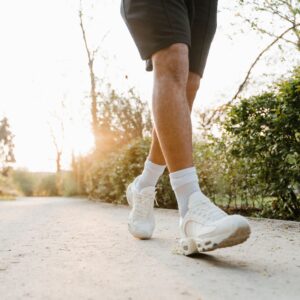
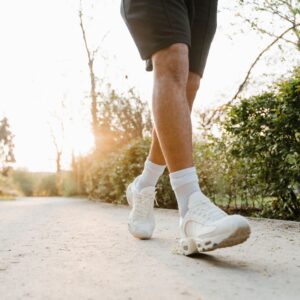
1. March in Place 40 Seconds
Stand comfortably with your feet about hip-width apart.
Lift one foot at a time while gently swinging your arms. Keep your posture comfortable and land softly.
Focus on:
- Keeping your chest comfortably upright
- Moving your arms naturally
- Maintaining a steady rhythm
- Breathing normally
This is an easy way to raise your activity level without requiring much space.
Make it easier: March slowly and keep your feet close to the floor.
Make it harder: Increase your marching pace while remaining in control.
2. Bodyweight Squat 40 Seconds
Stand with your feet around shoulder-width apart or slightly wider if that feels more comfortable.
Push your hips backward and bend your knees as if you were sitting toward a chair. Lower only as far as you can comfortably control, then press through your feet to stand.
Focus on:
- Keeping your feet stable
- Moving your knees in line with your feet
- Keeping your torso controlled
- Using a comfortable depth
You do not need to squat extremely low for the exercise to be useful.
Beginner modification: Place a sturdy chair behind you and practice sitting down gently and standing back up. Do not rely on an unstable chair or furniture that could move.
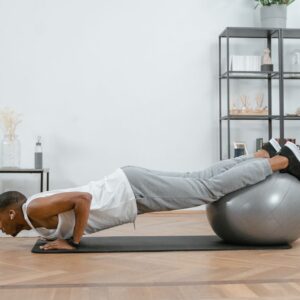
3. Wall Push-Up 40 Seconds
Stand facing a clear wall. Place your hands on the wall approximately around chest height.
Walk your feet backward slightly. Bend your elbows to bring your body toward the wall, then press through your hands to return to the starting position.
This is a beginner-friendly alternative to performing push-ups on the floor.
Focus on:
- Keeping your body controlled
- Avoiding a sudden drop toward the wall
- Moving your elbows comfortably
- Keeping your hands firmly planted
Progression: As you become stronger and more comfortable, you can use a lower, stable surface for an inclined push-up before eventually practicing a floor version if appropriate.
4. Glute Bridge 40 Seconds
Lie on your back with your knees bent and your feet resting on the floor.
Place your arms comfortably beside you. Gently tighten your abdominal area and press through your feet to lift your hips.
Pause briefly at the top, then lower your hips with control.
Focus on:
- Keeping your movement controlled
- Avoiding excessive arching of your lower back
- Keeping your feet stable
- Breathing throughout the movement
If lying on the floor is uncomfortable, replace this exercise with another standing movement rather than forcing the position.
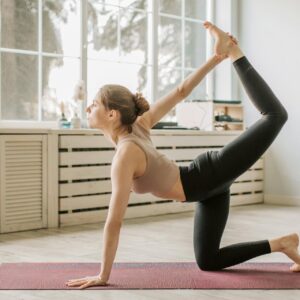
5. Bird Dog 40 Seconds
Start on your hands and knees, with your hands underneath or near your shoulders and your knees underneath or near your hips.
Slowly extend one arm and the opposite leg. Pause briefly if you can maintain control, then return them to the starting position. Switch sides.
The goal is controlled movement, not speed.
Focus on:
- Keeping your trunk steady
- Moving slowly
- Avoiding excessive twisting
- Keeping your neck comfortable
Beginner modification: Move only one limb at a time for example, extend one arm, return it, then extend one leg.
How to Put the Routine Together
Here is the complete sequence:
Minutes 0-3: Warm-up
- 1 minute easy marching
- 30 seconds shoulder rolls and arm movements
- 30 seconds gentle side-to-side steps
- 1 minute alternating knee lifts at an easy pace
Minutes 3-13: Main workout
Complete two rounds:
- March in place 40 seconds
- Rest or move gently 20 seconds
- Bodyweight squats 40 seconds
- Rest 20 seconds
- Wall push-ups 40 seconds
- Rest 20 seconds
- Glute bridges 40 seconds
- Rest 20 seconds
- Bird dogs 40 seconds
- Rest 20 seconds
Minutes 13-15: Cool-down
- Slow walking or marching
- Gentle breathing
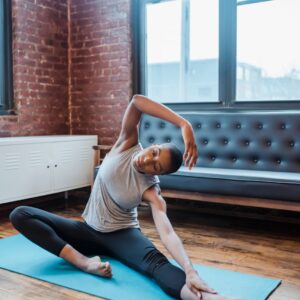
- Comfortable mobility movements
Do not treat the cool-down as a competition. The purpose is simply to bring the session to a calmer finish.
LEARN MORE ON
How beginners should start Exercise
How Hard Should a Beginner Work?
Beginners often make one of two mistakes: going far too hard or barely challenging themselves at all.
A useful starting point is an effort that feels challenging but controllable. You should still be able to maintain reasonable technique.
You do not need to exercise until you are exhausted for the workout to count.
Watch for signs that you should reduce the intensity, such as:
- Technique becoming noticeably worse
- Difficulty controlling your movements
- Feeling unusually dizzy or unwell
- Sharp or significant pain
- Breathing that feels uncomfortable rather than simply increased
If something hurts sharply or feels wrong, stop rather than trying to push through it.
How to Modify the Workout
The best beginner workout is one you can perform safely and consistently.
If you are completely new to exercise
Start with:
- 20-30 seconds of work
- 30-40 seconds of recovery
- One round instead of two
You can increase the duration gradually as the exercises become more familiar.
If your knees are sensitive
Try:
- Shallower squats
- Sit-to-stand movements from a stable chair
- Slower marching
- Smaller ranges of motion
Do not assume discomfort has to be tolerated simply because an exercise is labeled “beginner.”
If floor exercises are uncomfortable
Replace glute bridges and bird dogs with standing movements such as:
- Gentle marching
- Supported calf raises
- Sit-to-stands
- Controlled side steps
If the workout feels easy
Do not immediately turn every exercise into a high-intensity movement.
Instead, progress gradually by:
- Improving technique.
- Increasing the work interval slightly.
- Reducing unnecessary rest.
- Adding another round.
- Choosing a slightly more challenging variation.
Gradual progression is particularly useful for beginners because it gives the body time to adapt.
Common Mistakes to Avoid
Trying to exercise as fast as possible
Speed does not automatically make an exercise better. Rushing squats, push-ups, or bird dogs can make it harder to maintain control.
Skipping the warm-up
A short warm-up gives you time to transition from rest into movement. It can also help you rehearse the movements before working harder.
Copying advanced workouts
A workout that looks impressive online may not be appropriate for someone who is just starting. Exercise should match your current ability.
Holding your breath
Remember to breathe naturally. Beginners sometimes unintentionally hold their breath when concentrating on an exercise.
Doing too much too soon
Soreness or fatigue is not a requirement for progress. Increasing exercise volume or intensity too quickly can make it harder to recover and maintain a routine.
Focusing only on workouts
A 15-minute exercise session is valuable, but daily movement also matters. Walking, active transportation, household tasks, recreation, and other physical activities can contribute to your overall activity. WHO specifically emphasizes that physical activity includes more than structured exercise.
How Often Should You Do This Workout?
There is no universal schedule that works for everyone.
A beginner might start with this workout two or three days per week, leaving recovery time between strength-focused sessions. On other days, you can include comfortable activities such as walking, recreational movement, or other activities you enjoy.
For adults, the broader goal is to accumulate at least 150 minutes of moderate-intensity aerobic activity per week and perform muscle-strengthening activities involving major muscle groups on at least two days per week.
You do not have to achieve those numbers immediately. If you are currently inactive, starting with manageable amounts and gradually increasing activity is a sensible approach.
How to Progress After the First Few Weeks
Once the basic routine feels comfortable, change only one variable at a time.
For example:
Stage 1: 20–30 seconds per exercise, one round.
Stage 2: 40 seconds per exercise, one round.
Stage 3: 40 seconds per exercise, two rounds.
Stage 4: Progress individual movements to slightly more challenging variations.
You could eventually replace wall push-ups with incline push-ups, increase squat range if comfortable, or perform more controlled repetitions.
The goal is not to make every workout harder. The goal is to gradually develop your ability to perform the movements with good control.
Can a 15-Minute Workout Improve Fitness?
It can contribute to fitness, particularly when it is performed consistently and forms part of a larger pattern of physical activity.
However, the result depends on factors such as your starting fitness level, the exercises you perform, how often you train, your effort level, recovery, and other physical activity.
A 15-minute routine should therefore be viewed as a practical starting point rather than a guaranteed transformation.
For adults, public-health guidance supports accumulating activity throughout the week rather than requiring all exercise to happen in one long session.
Safety Tips for Beginners
Keep your workout area clear of slippery objects, furniture, cables, or anything else that could cause you to trip.
Choose stable footwear or an appropriate surface for the exercises you are doing. Move through a comfortable range of motion rather than forcing flexibility.
If you have a chronic health condition, disability, injury, or other concern that could affect exercise, ask a healthcare professional or qualified exercise professional about appropriate activities. The CDC specifically recommends discussing the type and amount of physical activity with a healthcare professional when chronic conditions or disabilities are involved.
Stop exercising and seek appropriate medical attention if you experience concerning symptoms such as severe chest discomfort, fainting, or severe difficulty breathing.
Frequently Asked Questions
Is 15 minutes of exercise enough for a beginner?
Yes, 15 minutes can be a useful starting point, particularly for someone who is currently inactive. It does not necessarily meet the full weekly activity recommendations by itself, but short sessions can contribute to your total physical activity.
Can I do this workout every day?
You do not need to perform the full strength routine every day. Beginners should allow recovery between strength-focused sessions and can use other days for comfortable activities such as walking or recreational movement.
Do I need equipment to get stronger?
No. Bodyweight exercises can provide resistance and help beginners develop strength and muscular endurance. As you progress, additional resistance can provide another way to increase the challenge, but it is not required to begin.
What should I do if I cannot complete all the exercises?
Modify them. Reduce the work interval, increase the recovery period, use a simpler variation, or complete fewer rounds. A workout should match your current ability rather than forcing you to perform an advanced version.
Should I feel pain during the workout?
You may experience normal muscular effort or fatigue, but sharp, severe, or unusual pain should not be ignored. Stop the movement and reassess it. Persistent or concerning pain deserves professional evaluation.
Can I do this workout without warming up?
A brief warm-up is a good way to prepare for the session. Three minutes is enough for this beginner routine. Start gently rather than immediately performing your hardest movements.
Can I combine this workout with walking?
Yes. Walking can complement a bodyweight routine and contribute to your overall physical activity. For adults, brisk walking is one example of moderate-intensity aerobic activity recognized in public-health recommendations.
How do I make the workout harder?
Progress gradually. You can increase work time, add a second or third round, reduce recovery slightly, or move to a more challenging exercise variation. Change one factor at a time so you can see how your body responds.
The Practical Way to Follow
A beginner does not need a complicated program to start moving. This 15-minute no-equipment home workout covers several basic movement patterns while keeping the routine simple enough to perform in a small space.
Start with the easiest version that allows you to maintain control. Focus on steady breathing and comfortable movement rather than trying to finish as quickly as possible. As the exercises become familiar, increase the challenge gradually.
Most importantly, think beyond a single workout. A short session can be one useful piece of an active week that also includes walking, recreation, everyday movement, and other activities you enjoy. For adults, the long-term target is regular physical activity across the week, including both aerobic movement and muscle-strengthening activities.

Ricki Hewitt is an advice, support, mental health, and inclusion professional with over eight years of experience across higher education, healthcare, and the voluntary sector. With a career built on the belief that inclusive environments empower people to truly thrive, Ricki brings a depth of knowledge and compassion to every aspect of their work.
Specialising in supporting individuals with disabilities, neurodivergence, mental health conditions, and complex personal circumstances, Ricki has developed a holistic, person-centred approach rooted in pastoral care, safeguarding, casework, and tailored learning support. Their work is guided by a commitment to improving wellbeing, retention, engagement, and progression by embedding accessibility and inclusion into every stage of the human experience.
Throughout their career, Ricki has worked across universities, healthcare services, and community organisations, delivering meaningful change through evidence-based support, inclusive practice, and collaborative working. Their extensive expertise spans disability support, reasonable adjustments, safeguarding, mental health interventions, equality, diversity, inclusion and belonging (EDIB), widening participation, and multi-agency partnership working.
Beyond frontline support, Ricki has led impactful projects and initiatives focused on accessibility, student engagement, LGBT+ inclusion, and organisational culture change demonstrating a commitment to systemic, lasting transformation rather than surface-level fixes.
At Switch to Nature (switchtonature.com), Ricki draws on this wealth of professional experience to explore the powerful relationship between nature, wellbeing, and inclusive living. Driven by the conviction that inclusive practice should be proactive, compassionate, and embedded within culture rather than treated as an afterthought, Ricki writes to help people from all backgrounds feel seen, supported, and genuinely empowered.
Whether through individual stories, evidence-informed insights, or practical guidance, Ricki’s writing reflects a lifelong dedication to creating equitable, human-centred spaces both online and in the world.
Connect with Ricki and explore more at: www.switchtonature.com