
Meal Prep for Back-to-School: 5 Lunches Kids Will Actually Eat
Packing school lunch sounds simple until you are standing in the kitchen at 6:30 a.m., trying to decide what your child will actually eat before the lunch bell ends. A lunch can be nutritious on paper and still come home untouched because the sandwich got soggy, the fruit was unfamiliar, or there simply wasn’t enough time to eat it.
Good meal prep for back-to-school is less about creating picture-perfect lunchboxes and more about finding meals that are familiar, practical, balanced, easy to pack, and appealing to your particular child.
A useful school lunch generally brings together several types of foods: a source of protein, a grain or other carbohydrate, fruit or vegetables, and an appropriate drink or dairy food when suitable. Variety matters over the course of the day and week rather than requiring every individual lunch to be perfect. The CDC notes that healthy eating during childhood and adolescence supports growth and development and encourages patterns that include fruits, vegetables, whole grains, and a variety of protein foods.
The five lunch ideas below are designed around a simple principle: make healthy food familiar enough that children are willing to eat it.
What Makes a School Lunch Kid-Friendly?
A successful lunch has two jobs. It needs to provide nourishing food, and it needs to be realistic for a child to eat during a relatively short school lunch period.
That second point is easy to overlook.
A child may not have the patience to unwrap complicated packaging, cut food into pieces, mix several ingredients together, or eat something that requires a fork and knife. Some schools also have limited lunchtime seating or eating time. The CDC recommends that schools provide students with adequate time to eat, noting that time spent waiting in line, walking to the lunch area, or handling other activities can reduce actual eating time.
Before planning a lunch, think about your child’s habits.
Do they prefer foods separated rather than mixed together? Do they usually eat fruit? Are they more comfortable with sandwiches, rice, pasta, wraps, or finger foods? Which foods regularly return home untouched?
Those observations can tell you more than a complicated lunchbox chart.
A balanced lunch also does not need to contain every food group in equal amounts. USDA MyPlate resources emphasize variety across fruits, vegetables, grains, protein foods, and dairy or fortified alternatives.
A Simple Formula for Meal Prep for Back-to-School
Instead of choosing five completely different recipes every week, build lunches from a few dependable components.
Think of the lunchbox as four parts:
- Main food: sandwich, wrap, rice, pasta, egg, beans, chicken, or another familiar option.
- Fruit or vegetable: choose something your child already accepts, then occasionally introduce something new.
- Extra: yogurt, cheese, nuts or seeds when age-appropriate and permitted by the school, or another suitable snack.
- Drink: usually water, unless the child’s needs or school policies call for something different.
This approach makes meal prep easier because you can prepare ingredients in batches rather than starting from scratch every morning.
For example, cooked chicken can become a sandwich on Monday, a wrap on Wednesday, and a rice bowl later in the week. Washed fruit can be portioned into containers at the same time. Hard-boiled eggs, cooked beans, or prepared vegetables can also become building blocks for several meals.
The goal is not to make lunch look different every day. The goal is to make preparation easier while giving your child enough variety to stay interested.
5 Back-to-School Lunches Kids May Actually Eat
1. Chicken and Cheese Wrap
A wrap is useful when your child enjoys sandwiches but you want to change the format.
Use a soft whole-grain or regular wrap, depending on what your child prefers. Add cooked chicken, cheese, and a small amount of a familiar spread or sauce. Keep wet ingredients modest so the wrap does not become soggy before lunchtime.
Serve it with sliced cucumber, carrots, apple pieces, orange segments, or another fruit or vegetable your child already enjoys.
Why it works
The ingredients are recognizable, and the wrap is relatively easy to hold. Protein from chicken and cheese can make the meal more substantial, while fruit or vegetables add variety.
If your child dislikes vegetables inside sandwiches, don’t force them into the wrap. Put cucumber or carrots in a separate compartment instead.
Sometimes separation is the difference between a lunch being eaten and being returned home.
2. Mini Pasta Salad Box
Cold pasta can be a surprisingly practical lunch because it can be prepared in advance and portioned into individual containers.
Cook pasta and allow it to cool properly in the refrigerator. Add pieces of cooked chicken, beans, cheese, sweetcorn, cucumber, or another ingredient your child already likes.
You don’t need to turn it into an elaborate restaurant-style pasta salad. In fact, fewer ingredients may work better for a selective eater.
For a child who prefers simple flavors, try pasta with chicken and a little cheese. Another child might prefer pasta with sweetcorn and cucumber.
Add a serving of fruit on the side.
Why it works
Pasta provides a familiar carbohydrate, while ingredients such as chicken, beans, or cheese can add protein. Vegetables can be introduced in small amounts without making the entire lunch unfamiliar.
The CDC recommends variety in children’s diets, including fruits, vegetables, whole grains, and different protein foods.
3. Egg, Toast and Fruit Lunchbox
Not every school lunch needs to be a sandwich.
For children who enjoy eggs, make a simple lunchbox with a cooked egg, small pieces of toast or whole-grain bread, fruit, and a suitable vegetable or additional snack.
Depending on the child’s preferences, the egg could be hard-boiled or prepared in another familiar form that travels safely.
Cut bread into small pieces or strips if that makes it easier for your child to eat.
Why it works
This lunch uses ordinary foods that many families already keep at home. It also allows you to serve foods separately, which can be helpful for children who dislike mixed meals.
You can rotate the fruit throughout the week: banana one day, apple another, orange segments another day, for example.
The purpose is not to make the lunch visually perfect. It is to create a combination your child recognizes and is willing to eat.
A useful tip
Ask your child to help choose between two fruit options rather than asking an open-ended question such as, “What do you want for lunch?”
For example:
“Do you want apple or banana tomorrow?”
Giving a small choice can make the child feel involved without turning lunch planning into a negotiation every morning.
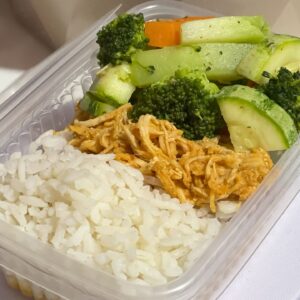
4. Rice and Chicken Lunchbox
Rice-based lunches can work particularly well for families who regularly eat rice at home.
Prepare rice as you normally would, then pair it with cooked chicken, beans, peas, carrots, sweetcorn, or another familiar accompaniment.
For children who don’t enjoy mixed rice dishes, keep everything separate.
For example:
- Rice in one section
- Chicken in another
- Cucumber or carrots in another
- Fruit in a small container
This creates a deconstructed lunch that allows the child to eat each component independently.
Why it works
Children do not all enjoy the same textures. Separating ingredients allows a child to avoid one ingredient without rejecting the entire meal.
It also makes the lunch more recognizable.
If your family eats rice regularly, packing a familiar rice-based meal may be much more successful than suddenly introducing an unfamiliar “healthy” lunch simply because school has started.
Food-safety reminder
Rice, cooked chicken, eggs, and other perishable foods need appropriate temperature control. If the lunch will not be refrigerated at school, use an insulated lunch bag with adequate cold sources and follow established food-safety guidance. USDA recommends keeping perishable foods cold during transport and using an insulated lunch bag with cold sources.
5. DIY Snack-Style Lunchbox
Some children simply prefer to eat several small foods instead of one large meal.
A snack-style lunchbox can include:
- Whole-grain crackers or bread
- Cheese
- Cooked egg or another suitable protein
- Sliced apple, banana, berries, orange segments, or another fruit
- Cucumber or another familiar vegetable
- Yogurt if it can be kept properly chilled
The portions should be appropriate for the child’s age and appetite rather than based on adult serving sizes.
Why it works
The child can choose the order in which to eat the foods. That can make lunch feel less like a large task.
It is also easy to change one component without rebuilding the entire lunch.
For example, keep the crackers, cheese, and fruit the same but switch the vegetable from cucumber to carrots.
This type of lunch is particularly useful for children who become bored with sandwiches.
How to Prep Five Lunches Without Spending Your Whole Weekend in the Kitchen
Meal prep does not mean cooking five complete lunches every Sunday.
A more practical strategy is to prepare components.
Step 1: Choose two main proteins
For example:
- Cooked chicken
- Eggs
Or:
- Beans
- Chicken
Step 2: Prepare two or three carbohydrate options
You might prepare:
- Rice
- Pasta
- Bread or wraps
Step 3: Wash and portion produce
Prepare fruits and vegetables that store well.
Keep some fruit whole when possible because it requires less preparation.
Step 4: Prepare lunchbox containers
Make sure containers are clean and dry. If your child uses multiple compartments, assign familiar foods to particular sections.
Step 5: Let your child choose
You can give your child two or three options from the foods you’ve prepared.
For example:
“Would you like chicken wrap or rice tomorrow?”
This is still meal prep, but it gives the child some control.
A Realistic Five-Day Example
| Day | Main | Fruit/Vegetable | Extra |
|---|---|---|---|
| Monday | Chicken and cheese wrap | Apple + cucumber | Yogurt |
| Tuesday | Pasta with chicken | Orange pieces | Cheese |
| Wednesday | Egg + toast | Banana + carrots | Crackers |
| Thursday | Rice + chicken | Cucumber + fruit | Yogurt |
| Friday | Snack-style lunchbox | Mixed fruit | Cheese + crackers |
You can swap ingredients based on what your family normally eats and what your child’s school permits.
There is no requirement for every lunch to look completely different.
How to Make Healthy Lunches More Appealing
Keep familiar foods in the rotation
A common mistake is changing too much at once.
If your child already likes chicken sandwiches, there is no need to eliminate them because you want a “healthier” lunch.
Instead, gradually improve the overall variety.
Add fruit. Offer a vegetable separately. Try whole-grain bread if your child accepts it. Experiment with different fillings.
Small changes are often easier to maintain than a complete overhaul.
Introduce new foods alongside familiar ones
If you want your child to try a new fruit or vegetable, don’t make the entire lunch unfamiliar.
Pair the new food with something you already know they enjoy.
For example, add a few cucumber slices alongside a familiar chicken sandwich.
The goal is exposure, not pressure.
Don’t turn lunch into a battle
Children’s food preferences can change. A food they rejected last month may become acceptable later.
Try to avoid making the lunchbox a daily argument.
Instead, continue offering variety while respecting the child’s preferences and paying attention to what consistently works.
Think about texture
A nutritious food is not automatically an appealing food.
Some children dislike soft textures. Others dislike crunchy foods. Some prefer foods that are separated.
Consider texture when packing.
If tomatoes make bread soggy, pack the tomatoes separately. If your child dislikes cooked carrots, offer raw carrots if appropriate and safely prepared. If yogurt is consistently returned untouched, choose another suitable food.
Food Safety Matters as Much as Nutrition
A well-balanced lunch still needs to be handled safely.
Perishable foods such as cooked chicken, eggs, cheese, yogurt, and some prepared salads should be kept cold. USDA guidance recommends using an insulated lunch bag and cold sources for perishable foods.
USDA also advises that perishable foods should not remain at room temperature for more than two hours, or more than one hour when temperatures are above 90°F (32°C).
For a packed lunch:
- Wash hands and clean preparation surfaces before preparing food.
- Refrigerate perishable ingredients promptly.
- Pack cold foods directly from the refrigerator.
- Use an insulated lunch bag.
- Include appropriate frozen cold sources.
- Find out whether the school provides refrigerator access.
- Follow the school’s food-allergy and food-storage rules.
- Discard perishable leftovers that have not been kept safely cold.
For younger children, also consider the child’s developmental stage when choosing foods and preparing pieces.
If your child has a diagnosed food allergy, swallowing difficulty, or another specific dietary need, follow the individualized guidance provided by their healthcare professional and school.
Common Back-to-School Lunch Mistakes
Making the lunch too complicated
A lunch with seven different foods may look impressive but can create unnecessary work.
Start with a few foods your child already eats.
Packing more than the child can reasonably eat
A lunchbox does not need to be completely full.
Children have different appetites, and appetite can vary from day to day. The goal is to provide a reasonable selection rather than pressure a child to finish everything.
Forgetting the school schedule
If lunch is short, complicated foods may not get eaten.
Practice opening containers, peeling fruit, unwrapping sandwiches, and using utensils before school begins.
It sounds minor, but a child who cannot easily open the lunchbox may spend valuable eating time struggling with packaging.
Choosing nutrition over preference every single time
It is reasonable to encourage variety, but food preferences matter too.
A lunch containing foods the child actually eats is generally more useful than a theoretically perfect lunch that returns home untouched.
Ignoring food temperature
This is one mistake that should not be treated casually.
Perishable food needs appropriate refrigeration or cold storage. If you cannot reliably keep a food cold until lunchtime, choose a shelf-stable alternative instead.
A Simple Sunday Meal-Prep Routine
You do not need to spend hours preparing school lunches.
Try a short routine:
Sunday
Cook one or two proteins, such as chicken or beans.
Prepare rice or pasta if those foods are part of your family’s normal meals.
Wash fruit and vegetables that will be used during the week.
Check lunchboxes, water bottles, containers, and cold packs.
Each evening
Ask your child to choose between two lunch combinations.
Move the necessary ingredients into the refrigerator.
Check that the lunchbox is clean.
Each morning
Assemble the lunch.
Add the appropriate cold source for perishable foods.
Pack the water bottle.
Give the child the lunchbox and remind them where everything is located.
This system removes many decisions from the busiest part of the morning.
Frequently Asked Questions
What should I put in my child’s school lunch?
A practical school lunch can include a familiar main food, a fruit or vegetable, a protein-rich food, and a suitable drink or additional food such as yogurt or cheese. The exact combination depends on the child’s age, preferences, dietary needs, and what the school permits.
How many lunches should I meal prep at once?
You can prepare components for several days rather than assembling five complete lunches at once. Foods that require refrigeration should be stored appropriately, and some ingredients may be better prepared closer to the day they will be eaten.
What if my child refuses vegetables?
Avoid turning vegetables into a daily battle. Continue offering familiar vegetables and occasionally introduce small amounts of new ones alongside foods your child already enjoys. Preferences can change over time.
Are sandwiches healthy for school lunch?
A sandwich can absolutely be part of a balanced lunch. Consider the bread, filling, accompanying fruit or vegetables, and overall variety across the day and week rather than labeling the entire meal as healthy or unhealthy.
How do I stop sandwiches from getting soggy?
Keep wet ingredients separate when possible. For example, pack tomato, cucumber, or sauce separately and let the child add them at lunchtime if practical. Choosing fillings with less moisture can also help.
Can I prepare school lunch the night before?
Yes. Preparing components or assembling certain lunches the night before can save time in the morning. Perishable foods should be refrigerated promptly, and USDA recommends keeping packed perishable lunches cold until lunchtime.
What if my child brings lunch home uneaten?
First, look for patterns rather than assuming the child simply dislikes the food. Was lunch difficult to open? Was there enough time to eat? Was the food too unfamiliar? Did the texture change?
Ask your child simple questions and adjust one part of the lunch at a time.
Conclusion
Successful meal prep for back-to-school does not require elaborate recipes, expensive ingredients, or a different lunch every morning.
The most useful approach is to build around foods your child already recognizes, add variety gradually, prepare ingredients ahead of time, and keep food safety in mind.
Start with five dependable lunches rather than trying to create an entirely new menu. A chicken wrap, pasta lunch, egg and toast box, rice and chicken combination, and snack-style lunchbox can all be adjusted to suit different preferences.
Most importantly, remember that a practical lunch is one your child can open, understand, enjoy, and eat within the time available.
A little planning on the weekend can make school mornings calmer and a little flexibility can make the lunchbox much more likely to come home empty.

Ricki Hewitt is an advice, support, mental health, and inclusion professional with over eight years of experience across higher education, healthcare, and the voluntary sector. With a career built on the belief that inclusive environments empower people to truly thrive, Ricki brings a depth of knowledge and compassion to every aspect of their work.
Specialising in supporting individuals with disabilities, neurodivergence, mental health conditions, and complex personal circumstances, Ricki has developed a holistic, person-centred approach rooted in pastoral care, safeguarding, casework, and tailored learning support. Their work is guided by a commitment to improving wellbeing, retention, engagement, and progression by embedding accessibility and inclusion into every stage of the human experience.
Throughout their career, Ricki has worked across universities, healthcare services, and community organisations, delivering meaningful change through evidence-based support, inclusive practice, and collaborative working. Their extensive expertise spans disability support, reasonable adjustments, safeguarding, mental health interventions, equality, diversity, inclusion and belonging (EDIB), widening participation, and multi-agency partnership working.
Beyond frontline support, Ricki has led impactful projects and initiatives focused on accessibility, student engagement, LGBT+ inclusion, and organisational culture change demonstrating a commitment to systemic, lasting transformation rather than surface-level fixes.
At Switch to Nature (switchtonature.com), Ricki draws on this wealth of professional experience to explore the powerful relationship between nature, wellbeing, and inclusive living. Driven by the conviction that inclusive practice should be proactive, compassionate, and embedded within culture rather than treated as an afterthought, Ricki writes to help people from all backgrounds feel seen, supported, and genuinely empowered.
Whether through individual stories, evidence-informed insights, or practical guidance, Ricki’s writing reflects a lifelong dedication to creating equitable, human-centred spaces both online and in the world.
Connect with Ricki and explore more at: www.switchtonature.com