10-Minute Full-Body Stretching Routine for Beginners
If your muscles feel stiff after sitting for hours, waking up in the morning, or finishing a workout, a simple stretching routine can help you move more comfortably. The good news is that you do not need special equipment or advanced flexibility to get started.
This 10-minute stretching routine for beginners includes nine gentle exercises that target your neck and shoulders, chest, back, hips, thighs, and calves. You can do it at home with enough space to stand, sit, or lie on a comfortable surface.
The goal is to gradually improve flexibility, maintain comfortable joint movement, and establish a consistent exercise habit not to force your body into difficult positions.
What Is a Full-Body Stretching Routine?
A full-body stretching routine is a series of movements designed to stretch major muscle groups throughout the body. Depending on the exercises you choose, it can target your upper body, back, hips, and legs in one short session.
For beginners, a good routine should be easy to follow, require little or no equipment, and allow you to adjust each movement to your current ability.
Regular stretching can improve flexibility and joint range of motion. These benefits may make everyday activities, such as reaching overhead, bending to pick something up, or walking comfortably, easier to perform. However, stretching alone does not replace cardiovascular exercise, strength training, or appropriate treatment for an injury.
According to Mayo Clinic’s stretching guidance, stretching works best when performed with proper technique and warmed-up muscles.
Benefits of Stretching for Beginners
Adding gentle stretching to your weekly routine offers several potential benefits.
1. Improved flexibility
Flexibility describes how far a muscle and the surrounding tissues can lengthen comfortably. Stretching regularly may gradually improve your ability to move through a joint’s range of motion.
You do not need to touch your toes or perform a split to benefit. Small improvements in comfortable movement are worthwhile.
2. Better everyday mobility
Your shoulders, hips, ankles, and other joints help you perform ordinary tasks. Maintaining a comfortable range of motion can make movements such as reaching, squatting, and stepping easier.
Stretching is one part of maintaining mobility, alongside regular physical activity and muscle-strengthening exercises.
3. An opportunity to break up long periods of sitting
Spending long periods in one position can leave some people feeling stiff. Taking a movement break and gently changing your body’s position may help you feel more comfortable.
You can perform a few shoulder rolls or a gentle standing stretch during the day instead of waiting until your entire body feels stiff.
4. A simple way to establish an exercise habit
A 10-minute routine is a manageable starting point for people who are new to exercise. Repeating a short, comfortable session may help you build consistency before adding other forms of physical activity.
Stretching should feel controlled and comfortable. It is not necessary to push through pain or make every session more difficult.
5. A relaxing movement break
Slow, controlled stretches paired with normal breathing can provide a quiet break from a busy day. Some people find this calming, although stretching should not be considered a guaranteed treatment for stress, anxiety, or sleep problems.
Before You Start: How to Stretch Safely
Before following this beginner stretching routine, keep these guidelines in mind.
- Warm up first. March gently in place or walk around for about five minutes before a longer stretching session, especially if your muscles feel cold or stiff. If you have been exercising, stretching afterward is a convenient option.
- Move slowly. Enter and leave every position with control. Avoid bouncing or forcing a joint beyond its comfortable range.
- Breathe normally. Do not hold your breath while stretching.
- Aim for mild tension. You may feel a gentle pulling sensation in the muscle, but you should not feel sharp pain, pinching, numbness, or tingling.
- Use support when needed. A sturdy chair or wall can help with balance during standing stretches.
- Adjust to your ability. You can reduce the movement, bend your knees slightly, or skip an exercise that is uncomfortable.
Mayo Clinic recommends holding many static stretches for around 30 seconds without bouncing. For this introductory routine, the holds are shorter or divided between sides where necessary, so the entire session fits into 10 minutes.
If you have a current injury, recent surgery, a medical condition affecting movement, or persistent unexplained pain, seek advice from a qualified healthcare professional before beginning. Pregnant readers or people recovering from childbirth may also need appropriate modifications.
The 10-Minute Full-Body Stretching Routine for Beginners
You can complete this routine at home without gym equipment. Follow the timing guide below, moving gently between positions.
| Time | Stretch | Main area |
|---|---|---|
| 0:00-1:00 | Shoulder rolls and gentle neck turns | Neck and shoulders |
| 1:00-2:00 | Standing chest opener | Chest and front shoulders |
| 2:00-3:00 | Standing side stretch | Sides of the torso |
| 3:00-4:00 | Cat-cow stretch | Back and spine |
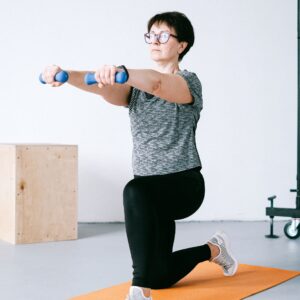
| 4:00-5:00 | Half-kneeling hip flexor stretch | Front of the hips |
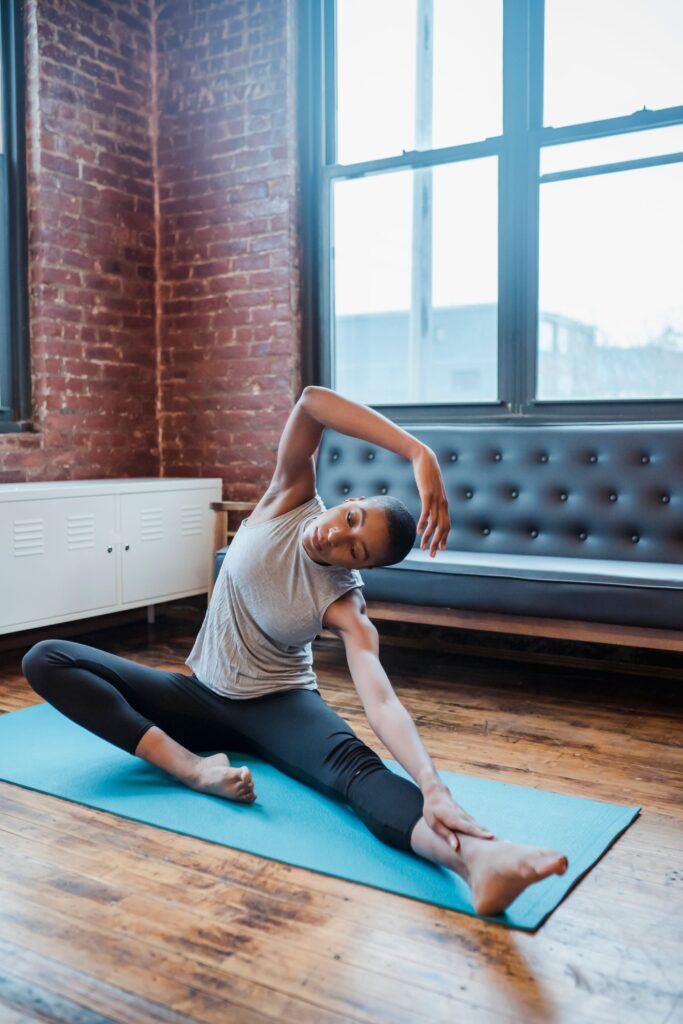
| 5:00-6:00 | Seated hamstring stretch | Back of the thighs |
| 6:00-7:00 | Lying figure-four stretch | Glutes and outer hips |
| 7:00-8:00 | Standing quadriceps stretch | Front of the thighs |
| 8:00-9:00 | Standing calf stretch | Calves and ankles |
| 9:00-10:00 | Gentle full-body reach and relaxed breathing | Whole body |
The final minute allows you to finish gradually rather than rushing out of the last stretch. The listed time includes changing positions.
1. Shoulder Rolls and Gentle Neck Turns
Duration: 1 minute
Targets: Neck, shoulders, and upper trapezius muscles.
Shoulder rolls and gentle neck movements help you move the upper body through a comfortable range of motion.
How to do it:
- Stand or sit upright with your shoulders relaxed.
- Slowly roll both shoulders forward five times.
- Roll them backward five times.
- Turn your head gently to the right, keeping your chin level.
- Return to the centre and turn gently to the left.
- Repeat the neck turns slowly, without forcing the movement.
Beginner tip: Keep the movement small if your neck feels stiff. Avoid rapid head circles or pulling your head with your hands.
2. Standing Chest Opener
Duration: 1 minute
Targets: Chest and front shoulders.
This stretch is a useful option after time spent sitting at a desk or using a phone.
How to do it:
- Stand with your feet about hip-width apart.
- Gently bring your arms behind your body and clasp your hands if comfortable.
- Straighten your arms slightly without locking your elbows.
- Lift your chest gently while keeping your shoulders relaxed.
- Hold the position for 15-30 seconds while breathing normally.
- Release and repeat once if time permits.
Beginner modification: If clasping your hands is difficult, place your hands on your hips and gently draw your shoulders back instead.
Do not force your arms backward or arch your lower back to create a deeper stretch.
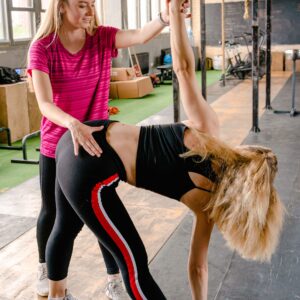
3. Standing Side Stretch
Duration: 1 minute
Targets: Side abdominal muscles and muscles along the torso.
How to do it:
- Stand with your feet about hip-width apart.
- Raise your right arm overhead.
- Slowly lean your upper body to the left, keeping both feet grounded.
- Hold for approximately 20-25 seconds.
- Return to the centre and repeat on the other side.
Keep your hips facing forward and avoid twisting your torso.
Beginner tip: Your arm does not have to reach far overhead. A small, comfortable lean is enough to begin.
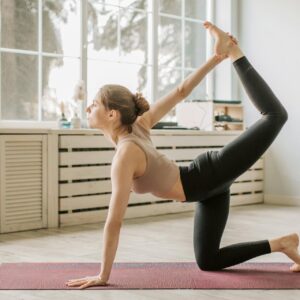
4. Cat-Cow Stretch
Duration: 1 minute
Targets: Back and spinal movement.
The cat-cow movement gently alternates between rounding and extending your back.
How to do it:
- Get onto your hands and knees on a comfortable mat or padded surface.
- Position your hands under your shoulders and knees under your hips.
- As you breathe out, gently round your back and let your head follow the movement.
- As you breathe in, slowly return toward a neutral spine and gently lift your chest.
- Continue alternating between the two positions for 45-60 seconds.
Beginner modification: Place a folded towel under your knees if kneeling is uncomfortable. If getting onto the floor is difficult, skip this movement rather than forcing yourself into position.
Move within a pain-free range and avoid exaggerating the arch in your lower back.
5. Half-Kneeling Hip Flexor Stretch
Duration: 1 minute
Targets: Hip flexors at the front of the hips.
Hip flexors help you lift your thighs and move your hips. This stretch may be useful if you spend much of your day sitting.
How to do it:
- Kneel on your right knee with your left foot placed in front of you.
- Keep your front knee comfortably bent and your torso upright.
- Gently tighten your abdominal muscles.
- Shift your pelvis forward slightly until you feel a mild stretch at the front of your right hip.
- Hold for approximately 25-30 seconds.
- Change sides and repeat.
Beginner modification: Place a folded towel under your kneeling knee. You can also hold a sturdy chair for balance.
Avoid leaning far forward or arching your back. The movement should come from a small, controlled shift of your hips.
6. Seated Hamstring Stretch
Duration: 1 minute
Targets: Hamstrings at the back of the thighs.
Your hamstrings help control hip and knee movement. Regular, gentle stretching may improve their flexibility over time.
How to do it:
- Sit on a firm surface with your right leg extended comfortably in front of you.
- Bend your left knee and place that foot in a comfortable position.
- Keep your back relatively straight.
- Hinge forward slightly from your hips, reaching toward your right shin or thigh.
- Stop when you feel a gentle stretch behind the right thigh.
- Hold for about 25-30 seconds, then switch sides.
Beginner tip: You do not need to touch your toes. Reaching your shin or simply leaning forward slightly is enough.
Keep a small bend in your extended knee if needed. Stop if you experience tingling, numbness, or sharp discomfort.
7. Lying Figure-Four Stretch
Duration: 1 minute
Targets: Gluteal muscles and outer hip.
This floor-based stretch targets the muscles around the back and outside of the hip.
How to do it:
- Lie on your back with both knees bent and your feet on the floor.
- Place your right ankle over your left thigh, just above the knee.
- Keep your right foot gently flexed.
- If comfortable, lift your left foot and bring your left thigh slightly toward your torso.
- Hold behind your left thigh rather than pulling directly on your knee.
- Maintain the stretch for approximately 25-30 seconds.
- Lower your leg carefully and switch sides.
Beginner modification: Keep the supporting foot on the floor and simply hold the crossed-leg position if bringing the thigh closer feels uncomfortable.
Avoid this exercise if it causes knee or hip pain. You should feel a mild stretch around the glute or outer hip, not pressure inside the joint.
8. Standing Quadriceps Stretch
Duration: 1 minute
Targets: Quadriceps, the muscles at the front of your thighs.
How to do it:
- Stand beside a wall or sturdy chair for balance.
- Bend your right knee and bring your right heel gently toward your buttocks.
- Hold your ankle if comfortable, or use a suitable strap only if you already know how to use one safely.
- Keep your knees reasonably close together and your torso upright.
- Hold for approximately 25-30 seconds.
- Release slowly and repeat on the other side.
Beginner modification: If you cannot comfortably reach your ankle, skip the standing version rather than balancing unsafely. A supported alternative can be selected with guidance from a qualified exercise professional.
Do not pull hard on your foot or force your knee into a painful position.
9. Standing Calf Stretch
Duration: 1 minute
Targets: Calf muscles and ankle mobility.
Calf flexibility can contribute to comfortable ankle movement during walking and other daily activities.
How to do it:
- Stand facing a wall and place both hands against it.
- Step your right foot backward while keeping both feet pointing forward.
- Bend your front knee slightly.
- Keep your back leg relatively straight and your rear heel on the floor.
- Lean gently toward the wall until you feel a mild stretch in the back calf.
- Hold for approximately 25-30 seconds.
- Switch legs and repeat.
Beginner tip: Take a shorter step if you feel too much tension. Do not bounce or force your heel toward the floor.
10. Gentle Full-Body Reach and Relaxed Breathing
Duration: 1 minute
Targets: A gentle finishing movement for the shoulders, torso, and whole body.
Finish with an easy movement that lets you transition out of the routine comfortably.
How to do it:
- Stand with your feet comfortably apart.
- Slowly reach both arms overhead, only as far as your shoulders allow.
- Lengthen your torso gently without arching your back.
- Lower your arms slowly.
- Repeat several times at a relaxed pace.
- Spend the remaining time breathing normally and noticing whether any area feels uncomfortable.
You do not need to take unusually deep breaths or hold your breath. Keep the movement natural and comfortable.
If overhead reaching is uncomfortable, leave your arms by your sides and finish with a gentle shoulder roll instead.
How Often Should Beginners Stretch?
Consistency matters more than forcing yourself through an intense session.
For generally healthy adults, the American College of Sports Medicine recommends flexibility exercises for the major muscle-tendon groups on at least two days per week, with a total of approximately 60 seconds per exercise. You can read its published exercise recommendations through PubMed.
You might begin with this simple schedule:
- Monday: Complete the 10-minute full-body routine.
- Tuesday: Take a comfortable walk or perform ordinary daily activities.
- Wednesday: Repeat the stretching routine.
- Thursday: Take movement breaks during long periods of sitting.
- Friday: Complete another comfortable session if you feel ready.
- Weekend: Choose enjoyable physical activities and rest as needed.
This is a flexible example, not a medical prescription. You can stretch more frequently if the movements suit you, provided you avoid excessive force and allow irritated muscles or joints to recover.
If you are new to exercise, combine stretching with other appropriate activities rather than treating it as your only form of movement.
Common Stretching Mistakes Beginners Should Avoid
Even simple stretches can become uncomfortable if performed incorrectly.
Stretching too aggressively
Trying to reach farther than your current flexibility allows can cause unnecessary discomfort. Move gradually and stop at a mild pulling sensation.
Skipping the warm-up
Static stretching is not a substitute for warming up before vigorous exercise. Start with light movement, then use dynamic movements that resemble your planned activity before more intense exercise.
Holding your breath
Breathing normally helps you remain relaxed and makes it easier to avoid tensing your muscles unnecessarily.
Expecting immediate results
Flexibility changes gradually and varies between individuals. Your progress may depend on your starting mobility, consistency, technique, and other factors.
Assuming stretching prevents every injury
Stretching can improve range of motion, but evidence does not support promising that it prevents all injuries or reliably eliminates post-exercise soreness. It should be one part of a balanced approach to physical activity.
Ignoring pain
A stretch should not produce sharp pain, numbness, tingling, or worsening joint discomfort. Stop the movement if these symptoms occur and seek professional advice when appropriate.
Frequently Asked Questions
1. Is 10 minutes of stretching a day enough?
Ten minutes is a practical starting point for maintaining a stretching habit and working on several major muscle groups. The results depend on the exercises, frequency, technique, and your individual needs. A short session is beneficial as a starting point, but it does not replace other forms of exercise.
2. Should beginners stretch in the morning or at night?
Either time can work. Morning stretching may help you ease into movement, while evening stretching can provide a relaxing transition after a busy day. Choose a time when you can move comfortably and consistently.
If you feel particularly stiff, begin with gentle walking or marching before moving into longer static stretches.
3. Is stretching better before or after exercise?
For vigorous activities such as running or jumping, a dynamic warm-up is generally more appropriate immediately beforehand. Static stretching is convenient after exercise, when your muscles are warm, or during a separate flexibility session.
The best approach depends on the activity and your individual goals.
4. How long should a beginner hold each stretch?
A comfortable hold of approximately 15-30 seconds is a reasonable starting point for many static stretches. Some exercises involve movement rather than holding a single position.
For this 10-minute routine, the one-minute blocks include changing sides and adjusting positions, so individual holds are shorter than the entire block.
5. Can I stretch without exercising first?
Yes, but if your muscles feel cold or stiff, begin with a few minutes of light movement. You can also stretch after an ordinary walk or workout. Avoid using aggressive static stretches as your only preparation for vigorous exercise.
6. Why do I feel pain when stretching?
Pain can indicate that you are moving too far, using an unsuitable position, or aggravating an existing problem. Stop if you experience sharp pain, joint pain, numbness, or tingling. Persistent or recurring symptoms deserve assessment by a qualified healthcare professional.
7. Can stretching improve flexibility permanently?
Regular stretching can improve flexibility, but the changes require maintenance and vary among individuals. If you stop stretching, some improvements may gradually diminish. Your results also depend on your normal activities, strength, mobility, and other individual factors.
Conclusion
A 10-minute full-body stretching routine can be a practical way for beginners to work on flexibility and comfortable movement without needing a gym or complicated equipment.
Start with gentle movements, pay attention to how your body responds, and avoid forcing yourself into difficult positions. You can adjust the routine as your comfort and mobility change.
Health disclaimer: This article provides general educational information and is not a substitute for individualized medical advice, diagnosis, or treatment. Consult an appropriate healthcare professional if you have an injury, persistent pain, or a medical condition that may affect exercise.

Ricki Hewitt is an advice, support, mental health, and inclusion professional with over eight years of experience across higher education, healthcare, and the voluntary sector. With a career built on the belief that inclusive environments empower people to truly thrive, Ricki brings a depth of knowledge and compassion to every aspect of their work.
Specialising in supporting individuals with disabilities, neurodivergence, mental health conditions, and complex personal circumstances, Ricki has developed a holistic, person-centred approach rooted in pastoral care, safeguarding, casework, and tailored learning support. Their work is guided by a commitment to improving wellbeing, retention, engagement, and progression by embedding accessibility and inclusion into every stage of the human experience.
Throughout their career, Ricki has worked across universities, healthcare services, and community organisations, delivering meaningful change through evidence-based support, inclusive practice, and collaborative working. Their extensive expertise spans disability support, reasonable adjustments, safeguarding, mental health interventions, equality, diversity, inclusion and belonging (EDIB), widening participation, and multi-agency partnership working.
Beyond frontline support, Ricki has led impactful projects and initiatives focused on accessibility, student engagement, LGBT+ inclusion, and organisational culture change demonstrating a commitment to systemic, lasting transformation rather than surface-level fixes.
At Switch to Nature (switchtonature.com), Ricki draws on this wealth of professional experience to explore the powerful relationship between nature, wellbeing, and inclusive living. Driven by the conviction that inclusive practice should be proactive, compassionate, and embedded within culture rather than treated as an afterthought, Ricki writes to help people from all backgrounds feel seen, supported, and genuinely empowered.
Whether through individual stories, evidence-informed insights, or practical guidance, Ricki’s writing reflects a lifelong dedication to creating equitable, human-centred spaces both online and in the world.
Connect with Ricki and explore more at: www.switchtonature.com