Low-Impact Cardio for Bad Knees: 8 Joint-Friendly Options That Keep You Moving
Knee pain can make exercise feel like a difficult choice. You may want to improve your fitness, strengthen your body, or simply move more, but activities such as running, jumping, and repeated squats can make your knees uncomfortable.
That doesn’t mean you have to give up cardio.
Low-impact cardio for bad knees can raise your heart rate without placing the same amount of pounding and impact on your joints as running or jumping. Walking, cycling, swimming, water exercise, and some low-impact workout classes are examples that may work well for people with knee discomfort. The right choice, however, depends on why your knee hurts, how severe the symptoms are, and how your body responds to the activity.
The goal isn’t to find an exercise that completely ignores your knees. It’s to find movement that your knees can tolerate while still giving your heart and lungs useful work.
Here are several options to consider, along with practical ways to get started and signs that mean you should have your knee checked.
What Is Low-Impact Cardio for Bad Knees?
Low-impact cardio is aerobic activity that places relatively little stress on your joints compared with high-impact activities such as running, jumping, or repeated hopping.
The word low-impact doesn’t mean no impact. Walking, for example, still involves your feet contacting the ground. The difference is that the activity generally creates less jarring or repetitive impact than running.
Common low-impact cardio options include:
- Walking
- Stationary cycling
- Outdoor cycling on suitable terrain
- Swimming
- Water aerobics
- Some forms of low-impact dancing
- Elliptical training, if comfortable
- Certain seated cardio workouts
The best option isn’t necessarily the one that looks easiest. It is the activity that allows you to exercise without causing significant or worsening knee symptoms.
For people with arthritis, the Centers for Disease Control and Prevention recommends joint-friendly activities such as walking, cycling, swimming, water exercise, and dancing. Physical activity can help improve physical function and may reduce pain associated with arthritis.
It’s also worth remembering that “bad knees” isn’t a medical diagnosis. Knee pain can come from many different causes, including injuries, arthritis, tendon problems, cartilage problems, and other conditions.
Why Does Knee-Friendly Cardio Matter?
Avoiding movement completely can seem sensible when your knees hurt, but prolonged inactivity isn’t usually the answer.
Regular physical activity supports cardiovascular fitness, muscle function, mobility, and general health. For people living with arthritis, research and public-health guidance support physical activity as part of managing symptoms and maintaining function.
Low-impact exercise can also make it easier to stay active when high-impact workouts aren’t comfortable.
For example, someone who can’t comfortably jog might be able to cycle for a period of time. Someone who finds walking uncomfortable may tolerate exercising in a swimming pool because the water reduces the amount of body weight the joints have to support.
The key is finding a form of movement you can perform consistently and comfortably.
8 Low-Impact Cardio Options for Bad Knees
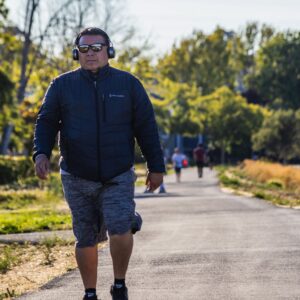
1. Walking
Walking is one of the simplest places to start.
It doesn’t require a gym membership or special equipment, and you can adjust the pace, distance, and surface to suit your current ability. Walking is also adaptable: a short, easy walk can be a starting point, while a faster walk can provide more cardiovascular challenge as your tolerance improves.
If regular walking bothers your knees, try making small changes:
- Start with a shorter distance.
- Choose a flat, even surface.
- Use a comfortable pair of supportive shoes.
- Walk at an easier pace.
- Take short breaks when needed.
- Increase your walking time gradually rather than suddenly.
Walking is specifically recognized as a joint-friendly activity for people with arthritis.
If walking consistently causes significant pain, swelling, or instability, don’t simply force yourself to continue. The cause of your knee symptoms may need to be assessed.
2. Stationary Cycling
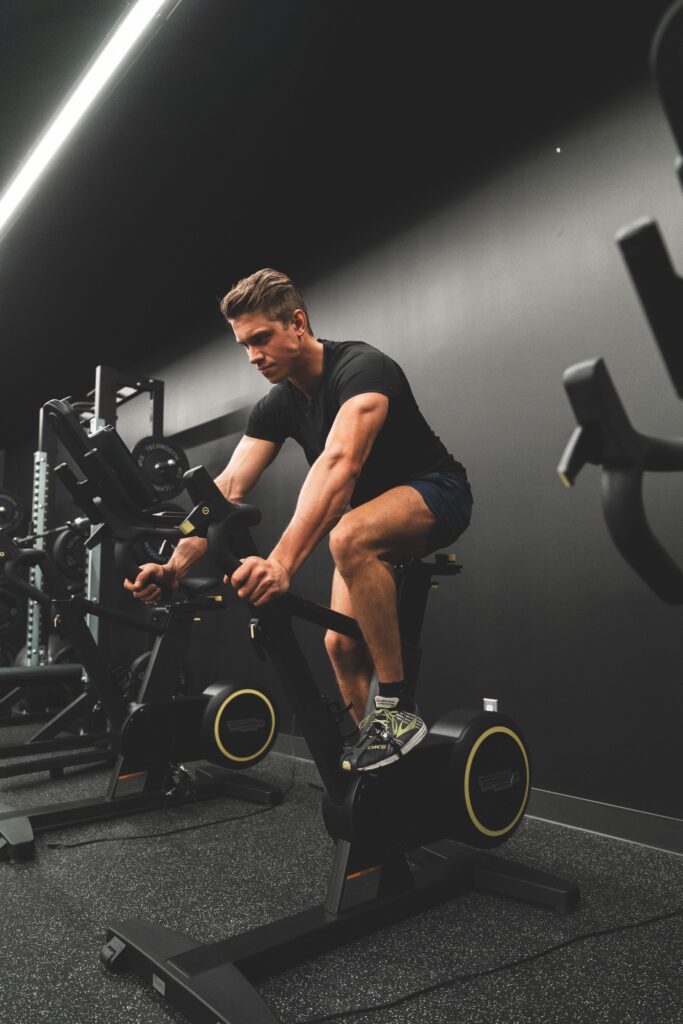
A stationary bike can provide cardio without the repeated foot strikes involved in jogging.
Because you’re seated, cycling can also be useful for people who find prolonged standing uncomfortable. Start with low resistance and an easy pace rather than immediately trying to reproduce an intense cycling workout.
Pay attention to your knee position and comfort. If the bike feels awkward or causes pain, the seat height or resistance may need adjustment, or cycling may simply not be appropriate for your particular knee problem.
The CDC and American Academy of Orthopaedic Surgeons both identify cycling as a low-impact option for people with joint or knee problems.
3. Swimming
Swimming is another useful option because the water supports much of your body weight.
Different swimming strokes place different demands on the body, so there isn’t one stroke that is automatically right for everyone with knee pain. Start at a comfortable pace and pay attention to how your knees respond.
Swimming can be especially appealing if weight-bearing activities such as walking are uncomfortable.
Recreational swimming is also considered moderate-intensity physical activity in general exercise guidance, although the actual intensity depends on how you swim and your individual fitness level.
4. Water Aerobics
You don’t have to swim laps to exercise in a pool.
Water aerobics and other water-based exercises can provide cardiovascular activity while reducing the amount of weight-bearing stress on the knees.
This can make the pool a useful environment for people who struggle with land-based exercise.
A class can also provide structure if exercising alone feels boring or difficult. However, choose a class that matches your ability rather than assuming every water workout will be gentle.
If a particular movement causes knee pain, modify it or ask the instructor for a lower-impact alternative.
5. Outdoor Cycling
If you enjoy being outside, cycling can be another way to get cardiovascular exercise without running.
A flat route is generally easier to manage than a route with steep hills. You can also control your pace and stop when necessary.
If you’re new to outdoor cycling, consider practical safety factors such as traffic, road surfaces, visibility, and appropriate protective equipment.
For someone whose knees don’t tolerate walking well, cycling may feel more comfortable because you’re not repeatedly landing on your feet with each step.
6. Elliptical Training
An elliptical machine keeps your feet in contact with the pedals instead of repeatedly lifting and landing them.
That makes it a lower-impact alternative to running for some people.
However, don’t assume that an elliptical is automatically suitable for every painful knee. The repeated bending of the knee can still bother some people, particularly if the resistance is high or the movement aggravates an existing problem.
Try a short, easy session first. If your knees respond well, you can gradually increase the duration.
If the movement causes pain that persists or worsens, choose another form of cardio instead.
7. Low-Impact Dance
Dancing doesn’t have to involve jumping, fast turns, or deep knee bends.
You can choose a low-impact routine where one foot stays in contact with the floor and movements remain controlled. Some people may enjoy simple dance-based cardio because it feels more like an activity than a traditional workout.
The important part is modifying movements that bother your knees.
Avoid movements involving repeated jumping, sudden pivots, or deep knee bending if those actions trigger symptoms.
The CDC lists dancing among joint-friendly physical activities for people with arthritis.
8. Seated Cardio
If standing exercise is currently difficult, seated cardio can be a practical temporary option.
Seated routines can involve movements such as:
- Arm punches
- Arm circles
- Seated marching, if comfortable
- Upper-body rhythmic movements
- Light resistance-band movements
Not every seated exercise is appropriate for every knee problem, and seated cardio may not provide the same whole-body challenge as walking or swimming.
Still, it can be a useful way to remain active when your ability to stand or walk is limited.
LEARN MORE ON
How to Start Low-Impact Cardio Safely
Choosing a knee-friendly activity is only part of the process. How you begin matters too.
Start shorter than you think you need to
If you’ve been inactive because of knee discomfort, don’t feel pressured to complete a long workout immediately.
Even short periods of activity can contribute to your total physical activity. The CDC notes that physical activity can be broken into smaller sessions, including periods of five or ten minutes.
For example, you might begin with a short walk or easy cycling session and see how your knees respond.
Keep the first few sessions easy
Your first goal is to learn what your knees tolerate.
An activity that feels manageable at a gentle pace may become uncomfortable if you immediately increase the speed or resistance.
Once you know how your body responds, you can gradually adjust the duration or intensity.
Don’t judge an exercise only by how it feels during the first few minutes
Pay attention to what happens afterward as well.
If an activity repeatedly leaves you with noticeably worse pain or swelling, that is useful information. It may mean that the activity, duration, intensity, or technique needs to change.
Add strength work when appropriate
Cardio is only one part of maintaining physical function.
Strengthening the muscles around the knee and hips can help support movement and reduce the demands placed on the knee during everyday activities. The American Academy of Orthopaedic Surgeons includes strengthening exercises for the quadriceps, hamstrings, and hip muscles in its knee-conditioning guidance.
If you have an existing knee injury or significant pain, a physical therapist can help determine which strengthening exercises are appropriate.
A Simple Knee-Friendly Cardio Example
There’s no single routine that works for everyone, but a beginner might structure activity like this:
Option 1: Walking
- Begin with a few minutes of easy walking.
- Continue at a comfortable pace.
- Stop or slow down if your knee symptoms become uncomfortable.
- Over time, increase the duration gradually if your knee tolerates it.
Option 2: Stationary bike
- Start with low resistance.
- Pedal at an easy, steady pace.
- Keep the session short at first.
- Check how your knee feels afterward.
- Increase time gradually if the activity remains comfortable.
Option 3: Pool exercise
- Begin with gentle water walking or an easy water exercise.
- Avoid movements that cause knee pain.
- Take breaks when necessary.
- Increase the duration gradually as your tolerance improves.
The CDC recommends that adults who are able work toward at least 150 minutes of moderate-intensity aerobic activity per week, along with muscle-strengthening activity on at least two days per week. However, people with chronic conditions should match the type and amount of activity to their abilities, and doing some activity is better than remaining completely inactive.
You don’t need to jump straight to that target if you’re currently dealing with knee pain.
What Exercises Should You Be Careful With?
There isn’t a universal list of exercises that every person with knee pain must avoid.
The same activity can feel fine for one person and aggravate another person’s knee.
That said, activities involving repeated jumping, hard running, sudden changes of direction, or high-impact landings can place greater demands on the knees. If those movements consistently trigger symptoms, choose a lower-impact alternative while you determine what your knee can tolerate.
For example:
- Replace running with walking or cycling.
- Replace jumping workouts with water exercise.
- Replace repeated jump squats with a suitable strength exercise recommended by a professional.
- Choose controlled dancing instead of routines with repeated jumping.
If your knee pain started after an injury, don’t assume that simply switching to low-impact cardio is enough. Some injuries require proper assessment and rehabilitation.
Common Mistakes and Misconceptions About Cardio for Bad Knees
“If my knees hurt, I should stop exercising completely.”
Not necessarily.
For many people with joint problems, appropriate physical activity can help maintain function and overall health. The key is choosing activity that matches your condition and current ability.
“Low-impact means I can’t get my heart rate up.”
That’s not true.
Walking briskly, cycling, swimming, and water aerobics can all provide moderate-intensity cardiovascular exercise. Intensity depends on the activity and how hard you perform it.
“If an exercise is recommended for arthritis, it must be safe for every knee problem.”
No.
Arthritis is only one possible cause of knee pain. A torn meniscus, ligament injury, tendon problem, infection, or another condition may require a different approach.
“More exercise is always better.”
Not when your body isn’t tolerating the activity.
Increasing exercise gradually gives you a chance to identify what works. If pain or swelling repeatedly increases after an activity, continuing to push through it isn’t a good substitute for finding out why.
Frequently Asked Questions
What is the best cardio for bad knees?
There isn’t one best exercise for everyone. Walking, cycling, swimming, and water aerobics are commonly recommended low-impact options. The best choice is generally the activity you can perform safely and consistently without significantly worsening your symptoms. Your specific knee problem also matters.
Is walking good for bad knees?
Walking can be a useful low-impact activity for many people with knee or joint problems. Start with a comfortable pace and manageable distance, especially if you’ve been inactive. If walking causes significant pain, swelling, instability, or worsening symptoms, have the problem assessed rather than repeatedly forcing longer walks.
Is cycling better than running for knee pain?
Cycling generally involves less impact than running, which is why it is commonly included among joint-friendly activities. However, cycling can still aggravate some knee conditions. Start with low resistance and an easy pace, and stop if the movement causes significant or worsening symptoms.
Can swimming help if walking hurts my knees?
It may. Water supports your body and reduces weight-bearing demands, making swimming and water exercise useful options for some people with knee pain. However, different swimming movements place different demands on the joints, so choose a comfortable activity and modify anything that causes symptoms.
Can I use an elliptical with knee pain?
Some people can use an elliptical comfortably, but it isn’t automatically suitable for every knee problem. The repeated bending motion may bother certain people. Start at low resistance and pay attention to how your knee responds during and after the workout.
How often should I do low-impact cardio?
Your appropriate frequency depends on your current fitness, symptoms, and health condition. General adult guidelines call for at least 150 minutes of moderate-intensity aerobic activity per week for those who are able, but you can build toward that gradually. Shorter sessions still count.
Should I exercise if my knee is swollen?
Don’t assume that swelling is something you should simply exercise through. Swelling can have several causes, including injury and underlying joint conditions. If swelling is significant, persistent, associated with warmth or redness, or accompanied by severe pain, seek medical advice.
When Should You Talk to a Healthcare Professional?
Persistent knee pain deserves attention, especially when you don’t know what’s causing it.
Consider speaking with a doctor or physical therapist if your pain keeps returning, interferes with normal activities, or isn’t improving. A professional can help determine whether the problem is related to arthritis, an injury, muscle weakness, movement patterns, or another condition.
Seek prompt medical attention if:
- You cannot put weight on the knee.
- Your knee gives way or feels unstable.
- The knee becomes badly swollen.
- You cannot properly bend or straighten it.
- The knee changes shape after an injury.
- You develop severe pain after an injury.
- The knee becomes red, hot, and swollen, particularly with fever or feeling unwell.
Don’t try to diagnose the cause of persistent knee pain from an online article. Getting the cause identified can make it much easier to choose appropriate exercise.
What to know
- Low-impact cardio can provide cardiovascular exercise with less joint impact than running and jumping.
- Walking, cycling, swimming, water aerobics, and some forms of low-impact dancing are common options.
- Low-impact doesn’t mean completely stress-free for the knees.
- Start slowly and increase activity gradually as your body tolerates it.
- An exercise that works for one person may not work for another because knee pain has many possible causes.
- Strengthening the muscles that support the knee can complement aerobic activity.
- Significant swelling, instability, inability to bear weight, severe injury-related pain, or a hot and red knee with fever should be medically assessed.
Conclusion
Having knee pain doesn’t automatically mean giving up cardio. The better approach is to find movement that fits your current abilities and doesn’t repeatedly aggravate your symptoms.
For many people, walking, cycling, swimming, and water exercise provide practical ways to stay active while reducing the impact placed on the knees. Start with a manageable amount, pay attention to how your body responds, and make changes gradually rather than trying to do too much at once.
If your knee pain is persistent, severe, or connected to an injury, getting professional advice is more useful than guessing which exercises are safe. Once you understand what your knee can tolerate, low-impact cardio for bad knees can become a realistic part of an active lifestyle.

Ricki Hewitt is an advice, support, mental health, and inclusion professional with over eight years of experience across higher education, healthcare, and the voluntary sector. With a career built on the belief that inclusive environments empower people to truly thrive, Ricki brings a depth of knowledge and compassion to every aspect of their work.
Specialising in supporting individuals with disabilities, neurodivergence, mental health conditions, and complex personal circumstances, Ricki has developed a holistic, person-centred approach rooted in pastoral care, safeguarding, casework, and tailored learning support. Their work is guided by a commitment to improving wellbeing, retention, engagement, and progression by embedding accessibility and inclusion into every stage of the human experience.
Throughout their career, Ricki has worked across universities, healthcare services, and community organisations, delivering meaningful change through evidence-based support, inclusive practice, and collaborative working. Their extensive expertise spans disability support, reasonable adjustments, safeguarding, mental health interventions, equality, diversity, inclusion and belonging (EDIB), widening participation, and multi-agency partnership working.
Beyond frontline support, Ricki has led impactful projects and initiatives focused on accessibility, student engagement, LGBT+ inclusion, and organisational culture change demonstrating a commitment to systemic, lasting transformation rather than surface-level fixes.
At Switch to Nature (switchtonature.com), Ricki draws on this wealth of professional experience to explore the powerful relationship between nature, wellbeing, and inclusive living. Driven by the conviction that inclusive practice should be proactive, compassionate, and embedded within culture rather than treated as an afterthought, Ricki writes to help people from all backgrounds feel seen, supported, and genuinely empowered.
Whether through individual stories, evidence-informed insights, or practical guidance, Ricki’s writing reflects a lifelong dedication to creating equitable, human-centred spaces both online and in the world.
Connect with Ricki and explore more at: www.switchtonature.com