Mobility vs. Flexibility: What’s the Difference and Why It Matters
If you have ever struggled to squat comfortably, reach overhead, touch your toes, or move through a workout without feeling stiff, you may have heard two terms: mobility and flexibility.
Although people often use them interchangeably, mobility and flexibility are not exactly the same thing. Flexibility generally refers to how much a muscle and surrounding tissues can lengthen, while mobility is your ability to actively move a joint through a useful range of motion with control.
Understanding mobility vs flexibility can help you choose exercises that better match what your body needs. For some people, stretching may be helpful. For others, the bigger need may be controlled movement, strength, balance, or coordination.
The good news is that you do not necessarily have to choose one over the other. Flexibility and mobility can work together as part of a balanced movement routine.
What Is Flexibility?
Flexibility is the ability of a muscle and its surrounding tissues to lengthen, allowing a joint to move through a range of motion.
For example, if you can comfortably straighten your legs and reach toward your toes, you may have good flexibility in the muscles around your hips and the back of your legs.
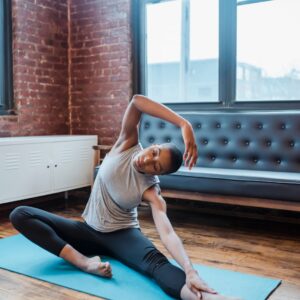
Flexibility is often associated with stretching. Common flexibility exercises include:
- Hamstring stretches
- Calf stretches
- Hip-flexor stretches
- Shoulder stretches
- Chest stretches
- Gentle back stretches
Flexibility can vary from one person to another. Factors such as age, activity level, previous injuries, daily habits, and individual body structure can influence how easily someone moves into certain positions.
What Does Flexibility Look Like in Everyday Life?
Flexibility can be useful during ordinary activities. You may notice it when:
- Bending down to pick something up
- Reaching for an item on a shelf
- Getting dressed
- Sitting comfortably in different positions
- Reaching behind you
- Performing stretches after exercise
However, being flexible does not automatically mean that you can control your body well through that available range of motion.
That is where mobility becomes important.
What Is Mobility?
Mobility is your ability to actively move a joint through its available range of motion with control.
In simple terms, flexibility is partly about how far you can move, while mobility is about how well you can use that movement.
For example, you may be able to passively move your shoulder into a certain position during a stretch. But if you cannot actively raise your arm into that position smoothly and comfortably, your mobility may be more limited than your flexibility.
Mobility involves more than muscle length. It can also involve:
- Joint movement
- Muscle strength
- Motor control
- Balance
- Coordination
- Stability
- Body awareness
This is why mobility exercises often look different from traditional static stretches.
Mobility vs Flexibility: What’s the Difference?
The easiest way to understand mobility vs flexibility is to think about flexibility as one part of movement, while mobility is the ability to actively and confidently use your available range of motion.
Here is a simple comparison:
| Flexibility | Mobility |
|---|---|
| Focuses largely on tissue length and range of motion | Focuses on active, controlled movement |
| Often improved through stretching | Often trained through controlled exercises |
| Can involve passive positions | Requires active participation |
| Does not necessarily require strength | Often involves strength and control |
| Can contribute to mobility | Includes flexibility as one component |
Neither is automatically more important than the other. Your needs depend on your activities, fitness level, movement habits, and individual limitations.
Why Mobility Matters
Good mobility can make everyday movement feel more comfortable and controlled.
For example, consider a simple squat. A person needs enough movement at the ankles, knees, hips, and other parts of the body to reach and return from the desired position. They also need strength and coordination to control the movement.
Mobility can be useful for activities such as:
- Squatting
- Walking
- Climbing stairs
- Reaching overhead
- Getting up from the floor
- Bending and lifting
- Exercising
- Playing recreational sports
Mobility also matters because movement is rarely isolated to one muscle. Many everyday activities require several joints and muscle groups to work together.
Why Flexibility Matters
Flexibility can contribute to comfortable movement and may make certain positions easier to access.
For example, if your muscles feel particularly tight after spending long periods sitting, gentle stretching may help you feel less restricted temporarily.
Flexibility training can also be useful when a particular activity requires a larger range of motion.
However, more flexibility is not always better. The goal is generally to have a useful range of motion that you can control rather than trying to become as flexible as possible.
Can You Be Flexible but Have Poor Mobility?
Yes.
This is one of the most important points when comparing mobility vs flexibility.
Imagine someone who can move their leg very far during a passive stretch. That demonstrates a certain level of flexibility. But if they struggle to lift and control the leg themselves, they may not have the same level of active mobility.
Mobility requires you to control movement.
For this reason, mobility training often combines range of motion with strength and coordination.
Can You Have Good Mobility Without Being Extremely Flexible?
Yes.
You do not need to be exceptionally flexible to move well.
Someone may have a moderate range of motion but have excellent control, strength, balance, and coordination within that range.
For everyday fitness, the goal does not have to be achieving impressive stretching positions. Instead, it can be developing enough comfortable, controlled movement for the activities you regularly perform.
Mobility Exercises vs. Flexibility Exercises
Although there can be some overlap, mobility and flexibility exercises generally have different purposes.
Examples of Flexibility Exercises
Flexibility exercises commonly involve holding a stretch for a period of time.
Examples include:
- Seated hamstring stretch
- Standing calf stretch
- Hip-flexor stretch
- Chest stretch
- Gentle shoulder stretch
These exercises can be performed as part of a general stretching routine.
Examples of Mobility Exercises
Mobility exercises usually involve controlled movement through a range of motion.
Examples include:
- Controlled hip circles
- Ankle rocks
- Shoulder circles
- Thoracic rotations
- Controlled leg swings
- Deep squat holds with gentle movement
- Controlled arm raises
The exact exercise you choose should depend on the movement you want to improve.
Should You Stretch or Do Mobility Exercises?
You may benefit from both.
If you feel generally stiff, flexibility exercises may be useful. If you can reach a position but struggle to control your body there, mobility-focused exercises may be more relevant.
A simple routine might include:
- Gentle movement to warm up.
- Dynamic mobility exercises.
- Your normal workout or physical activity.
- Gentle flexibility work afterward if it feels comfortable.
There is no universal routine that everyone needs to follow. Your activities and individual needs should guide your approach.
How to Improve Mobility
Improving mobility usually involves regular practice rather than occasional intense sessions.
1. Start With Gentle Movement
Before doing demanding exercises, spend a few minutes moving your major joints.
You might perform gentle:
- Arm circles
- Shoulder movements
- Hip circles
- Ankle movements
- Leg swings
Keep the movements controlled rather than forcing your body into extreme positions.
2. Work on the Joints You Actually Use
Think about the activities you do regularly.
If you spend much of the day sitting, you may want to include exercises involving the hips, upper back, shoulders, and ankles.
If you participate in a sport, consider the movement patterns involved in that activity.
3. Build Strength Through Your Available Range
Mobility is not just about moving farther. Strength and control matter too.
Simple resistance exercises performed with appropriate technique can help you become more comfortable controlling your body through different positions.
4. Practice Consistently
A short routine performed regularly can be easier to maintain than an extremely long session once in a while.
You could spend a few minutes incorporating mobility exercises into your normal workout or daily routine.
5. Do Not Force a Joint Into a Position
Mobility work should generally feel controlled rather than aggressive.
Avoid bouncing forcefully into stretches or trying to push through sharp pain. If a movement consistently causes pain or feels unusually restricted, consider discussing it with a qualified healthcare professional or physical therapist.
How to Improve Flexibility
Flexibility can also improve with consistent practice.
Use Gentle Stretching
Move gradually into a stretch rather than forcing the position.
You should generally feel tension, but sharp or intense pain is a reason to stop.
Stretch the Areas Relevant to Your Activities
You do not need to stretch every muscle equally.
If certain areas regularly feel restricted during your activities, you can give those areas appropriate attention.
Be Patient
Flexibility changes gradually for many people. Trying to force rapid progress can make stretching uncomfortable and may increase the risk of injury.
Consistency is more useful than trying to achieve a dramatic range of motion in a single session.
Common Mistakes People Make
Understanding mobility vs flexibility can help you avoid several common mistakes.
1. Assuming More Flexibility Is Always Better
Being extremely flexible is not automatically the goal.
What matters is having a range of motion that is useful for your activities and being able to control it.
2. Treating Every Stiff Feeling With More Stretching
Feeling stiff does not always mean that a muscle simply needs more stretching.
Movement habits, strength, fatigue, prolonged sitting, and other factors can influence how your body feels.
A combination of movement, strengthening, and appropriate flexibility work may be more useful than stretching alone.
3. Ignoring Strength
Mobility and flexibility are only part of physical fitness.
Strength helps you control your body during movement. Including appropriate strengthening exercises can therefore complement mobility work.
4. Stretching Aggressively
Pushing hard into a stretch does not necessarily produce better results.
Gentle, controlled movement is generally a better approach than forcing your body into uncomfortable positions.
5. Comparing Your Range of Motion With Someone Else’s
People naturally have different movement abilities and body structures.
Instead of comparing your flexibility with another person’s, focus on whether your movement is comfortable, controlled, and appropriate for your activities.
A Simple Mobility and Flexibility Routine
You do not need a complicated program to start.
A simple routine could include:
1. Gentle Warm-Up
Spend a few minutes walking around or performing easy movements to get your body moving.
2. Upper-Body Mobility
Try controlled shoulder circles and gentle upper-back rotations.
3. Lower-Body Mobility
Include controlled ankle movements, hip circles, or gentle leg swings.
4. Strength-Based Movement
Perform appropriate bodyweight or resistance exercises that you can complete with good control.
5. Gentle Flexibility Work
Finish with comfortable stretches for areas that feel particularly restricted.
The purpose is not to force your body into extreme positions. It is to gradually develop comfortable, useful movement.
Mobility and Flexibility for People Who Sit a Lot
If you spend several hours sitting for school, work, studying, or other activities, regularly changing positions can be helpful.
Instead of waiting until you feel very stiff, take opportunities throughout the day to:
- Stand up
- Walk around
- Move your shoulders
- Gently rotate your upper back
- Move your hips and ankles
- Change your sitting position
Small movement breaks can make it easier to avoid spending long periods in one position.
Mobility and Flexibility for Exercise
Mobility can be particularly relevant to exercise because many workouts involve moving joints through specific ranges of motion.
For example, someone who enjoys strength training may want to develop comfortable movement around the ankles, hips, shoulders, and upper back depending on the exercises they perform.
Flexibility may also support the ability to access certain exercise positions.
However, there is no single mobility routine that every person needs. The right approach depends on your exercise activities, experience, and individual movement limitations.
When Should You Get Professional Advice?
Some limitations in movement are normal, but persistent or significant problems deserve professional attention.
Consider speaking with a qualified healthcare professional or physical therapist if you experience:
- Persistent or worsening pain
- Significant loss of movement
- Repeated problems with the same joint
- Difficulty performing normal daily activities
- A movement limitation following an injury
- Swelling or other concerning symptoms
A professional can assess your individual situation and help determine what type of movement or rehabilitation approach may be appropriate.
Frequently Asked Questions
1. What is the main difference between mobility and flexibility?
Flexibility generally describes how much a muscle and surrounding tissues can lengthen, while mobility describes the ability to actively move a joint through a range of motion with control.
2. Is mobility more important than flexibility?
Neither should automatically be considered more important. Flexibility can contribute to available range of motion, while mobility involves using that range actively and with control. Your needs depend on your activities and individual movement abilities.
3. Can stretching improve mobility?
It can help when limited flexibility is restricting movement. However, mobility may also require strength, coordination, balance, and control, so stretching alone may not address every mobility limitation.
4. How often should I work on mobility?
There is no universal schedule that works for everyone. Short, consistent sessions can be incorporated into your normal exercise or daily routine. The amount you need depends on your activities and individual needs.
5. Should I do mobility exercises before or after a workout?
Gentle, dynamic mobility movements can fit well into a warm-up. More relaxed flexibility work can also be included after exercise or at another convenient time. The best approach depends on the activity and your individual routine.
6. Does being flexible mean you have good mobility?
Not necessarily. Flexibility can provide access to a range of motion, but mobility also requires the ability to actively control movement through that range.
7. Can beginners improve their mobility and flexibility?
Yes. Beginners can gradually work on comfortable movement, strength, coordination, and flexibility. Start with manageable exercises and increase difficulty gradually rather than forcing extreme ranges of motion.
Conclusion
Understanding mobility vs flexibility can make your approach to movement more practical. Flexibility relates largely to how much tissues can lengthen and the range of motion available, while mobility involves actively controlling movement through that range.
You do not have to choose between them. A balanced approach can include gentle flexibility work, mobility exercises, strength training, and regular everyday movement.
Rather than trying to become extremely flexible, focus on developing movement that is comfortable, controlled, and useful for your daily activities. Small amounts of consistent practice can become a natural part of your fitness and self-care routine.

Ricki Hewitt is an advice, support, mental health, and inclusion professional with over eight years of experience across higher education, healthcare, and the voluntary sector. With a career built on the belief that inclusive environments empower people to truly thrive, Ricki brings a depth of knowledge and compassion to every aspect of their work.
Specialising in supporting individuals with disabilities, neurodivergence, mental health conditions, and complex personal circumstances, Ricki has developed a holistic, person-centred approach rooted in pastoral care, safeguarding, casework, and tailored learning support. Their work is guided by a commitment to improving wellbeing, retention, engagement, and progression by embedding accessibility and inclusion into every stage of the human experience.
Throughout their career, Ricki has worked across universities, healthcare services, and community organisations, delivering meaningful change through evidence-based support, inclusive practice, and collaborative working. Their extensive expertise spans disability support, reasonable adjustments, safeguarding, mental health interventions, equality, diversity, inclusion and belonging (EDIB), widening participation, and multi-agency partnership working.
Beyond frontline support, Ricki has led impactful projects and initiatives focused on accessibility, student engagement, LGBT+ inclusion, and organisational culture change demonstrating a commitment to systemic, lasting transformation rather than surface-level fixes.
At Switch to Nature (switchtonature.com), Ricki draws on this wealth of professional experience to explore the powerful relationship between nature, wellbeing, and inclusive living. Driven by the conviction that inclusive practice should be proactive, compassionate, and embedded within culture rather than treated as an afterthought, Ricki writes to help people from all backgrounds feel seen, supported, and genuinely empowered.
Whether through individual stories, evidence-informed insights, or practical guidance, Ricki’s writing reflects a lifelong dedication to creating equitable, human-centred spaces both online and in the world.
Connect with Ricki and explore more at: www.switchtonature.com